

Mathini Ilancheran updates us on how delayed U.S. tariffs on generic drug imports could reshape supply, sourcing, and trial planning.


- Are Biopharma Companies Outsourcing Their Ability To Think?
- June 2026 — CDMO Opportunities And Threats Report
- The Decision Rights Matrix: Making Sponsor-CDMO Governance Enforceable
- Defining Quality In A Sponsor-Owned QTPP Before The CDMO Even Starts
- Reshoring Pressure Meets Manufacturing Reality
- CDMO Live Europe 2026: Partnerships For An Uncertain World
- Resilience, Risk, And Relationships: CDMO Live Europe 2026 Report
EDITOR'S DESK
-
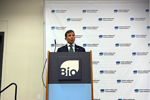
 BIO 2026: Crowley On Competing With China And Modernizing The FDA
Exclusive coverage from John Crowley's press conference at the 2026 BIO International Convention in San Diego.
Noveome Biotherapeutics's Larry Brown, Sc.D., explains the regulatory and CMC challenges behind the company's novel secretome therapy, ST266.
This article summarizes the major developments and industry pressures highlighted by Life Science Connect editors in the "Better Biopharma" midyear editorial roundtable.
Bioprocess Online's Editorial Advisory Board responds to former FDA commissioner Marty Makary’s resignation amid a prolonged period of instability at the agency.
Audience polls and expert insights reveal insufficient vendor data as the main bottleneck stalling advanced single-use technology adoption. Explore that and other key takeaways in this recap of the Bioprocess Online Live event on "Closing The Adoption Gap For Advanced Single-Use Materials."
GUEST COLUMNISTS
-
 Are Biopharma Companies Outsourcing Their Ability To Think?
Amid gaining immediate access to external manufacturing capabilities, sponsor companies can lose the foundational understanding required to govern that capability.
-
 June 2026 — CDMO Opportunities And Threats Report
Each month, Outsourced Pharma works in conjunction with PharmSource, part of GlobalData, to present its “Contract Manufacturing: Opportunities and Threats (CMOT) Report” to our readers. The report identifies CDMOs that might be impacted by key events affecting their clients, including company acquisitions, product acquisitions and licenses, product approvals, late clinical product terminations, and FDA rejections.
-
 The Decision Rights Matrix: Making Sponsor-CDMO Governance Enforceable
In LVV manufacturing, the quality target product profile and the DRM are designed to work together. One defines what is being governed, the other names who governs it.
-
 Defining Quality In A Sponsor-Owned QTPP Before The CDMO Even Starts
Version-controlled quality target product profiles, authored by the drug sponsor, close any gaps between the CDMO's and sponsor's definitions of quality.
-
 Reshoring Pressure Meets Manufacturing Reality
U.S. pharma can't reshore what domestic capacity can't absorb. Senior leaders from Takeda, Biogen, Eli Lilly, and others reveal why tariff pressure is colliding with a sterile fill-finish shortage, workforce gaps, and ADC capacity bottlenecks.
-
 CDMO Live Europe 2026: Partnerships For An Uncertain World
112 pages of executive insight from CDMO Live Europe 2026: tariffs, geopolitics, supply resilience, AI in manufacturing, and why strategic partnerships remain aspirational for most.
-
 Resilience, Risk, And Relationships: CDMO Live Europe 2026 Report
Senior pharma leaders from Pfizer, Bayer, BioNTech and others debunk dual sourcing myths and reveal what separates strategic CDMO partnerships from transactional ones.
-
 Demonstrating Non-Inferiority Of BFPCs Vs. Traditional Air Monitoring
Demonstrating non-inferiority of bio-fluorescent particle counter (BFPC) technology to traditional active air-sampling methods is essential for implementation. Here's how to approach it.







BIOPROCESSING WHITE PAPERS
-
 FIH: Reach Milestones Sooner With A Technology-Driven Approach
Accelerate your path to IND and FiH with AI-driven design, advanced cell line engineering, and intensified processes delivering high titers in 9–14 months.

-
A Faster Path To Genomic Medicine Feasibility3/17/2026
Life Edit accelerates genomic medicine by comparing five editing modalities, engineering new enzymes, and rapidly pinpointing optimal strategies that boost feasibility, cut risk, and speed clinical progress.
-
ADCs As Biological Missiles For Targeted Therapies6/15/2026
Antibody-drug conjugates are reshaping cancer treatment. Learn how monoclonal antibody targeting, linker design, and next-gen payloads are defining the future of precision oncology.
-
How To Take Your Process To A Closed System4/22/2025
Understand the critical considerations for implementing closed systems in bioproduction, from vessel selection to workflow customization for optimal efficiency and safety.
-
Small Volume ATMP Cryo-Freezing Strategies3/11/2025
Discover best practices for cryopreserving small-volume ATMPs, focusing on sterility, viability, and efficiency with advanced containers and packaging.
-
Methods For Determining Equipment Capability Of Freeze-Dryers10/16/2024
Observe two experimental methods for determining choked flow: the minimum controllable pressure method and the choke point method.
BIOPROCESSING APP NOTES & CASE STUDIES
- Multispecific Manufacturability Starts With Molecular Design
- On The Ground At BIO 2026: Johanna Kaufmann, Ph.D., On The Oncology Modality Puzzle
- BIO 2026: Modernizing The FDA And Bolstering The Workforce
- BIO 2026: Crowley On Competing With China And Modernizing The FDA
- Essential CMC Elements For A Therapeutic Secretome
- Midyear Pulse Check: What's Shaping Biopharma In 2026?
- Reflecting On Continued Turbulence At The FDA
BIOPROCESS ONLINE CONTENT COLLECTIONS
This collection of articles digs into the industry’s growing focus on knowledge management as an indispensable facet of biomanufacturing and pharmaceutical development, exploring how it plays into risk management, quality, vendor relationships, and supply chain resilience.
More Content CollectionsFEATURED PRODUCTS AND SERVICES


ON-DEMAND WEBINARS
INDUSTRY NEWS


NEWSLETTER ARCHIVE
- 08.08.26 -- Bioprocess Online Newsletter - Best Of July
- 08.07.26 -- New Podcast Episodes: BoB@BIO, In Vivo Gene Editing, Multispecific Manufacturability, and More
- 08.07.26 -- Digitalizing The Biopharma Ecosystem With Kat Kozyrytska
- 08.07.26 -- BIO 2026: Modernizing The FDA And Bolstering The Workforce
- 08.06.26 -- Fermentation Solutions For Scaling Upstream Bioprocessing With More Control