
DOWNSTREAM PROCESSING FEATURED ARTICLES
MIT researchers have developed RNA-delivering nanoparticles that allow for rapid screening of new drug targets in mice. In their first mouse study, done with researchers at Dana-Farber Cancer Institute and the Broad Institute, they showed that nanoparticles that target a protein known as ID4 can shrink ovarian tumors.
-
International Stem Cell Corporation Announces Positive Results From In Vivo Animal Study Of Parkinson's Disease
International Stem Cell Corporation (
OTCQB : ISCO) (www.internationalstemcell.com) ("ISCO" or "the Company") a California-based biotechnology company, today announced positive 12-week results from its pre-clinical in vivo Parkinson's disease study. -
Novasep Launches The Sius Single-Use TFF Skid, Completing The First 100 Per Cent Single-Use TFF Solution For Pre-Clinical To Clinical cGMP Biomanufacturing
Novasep, a leading supplier of purification solutions to the life sciences industries, recently announces the launch of its Sius single-use tangential flow filtration (TFF) skid.
-
 One-Touch Single-Use Fluid Path Assemblies Enhance Operational Flexibility Meissner’s One-Touch single-use fluid path assemblies are designed for secure fluid transfer in critical biopharmaceutical processing applications. The assemblies reduce process risk while providing an enhanced level of convenience that maximizes flexibility in the deployment of singleuse systems, as well as conventional systems.

DOWNSTREAM PROCESSING WHITE PAPERS & CASE STUDIES
-
 Selecting The Optimal Resins For The Process Purification Of Native And Recombinant Proteins
Native and recombinant proteins are used in a variety of applications ranging from drug discovery to target validation to high-throughput screening. Due to this, large-scale protein production and purification have become major necessities in industrial settings.
-
Top 10 Considerations When Selecting An Isolator Supplier
While price is certainly an important reason for buying any piece of capital equipment, it is not always the top reason. There are important considerations to examine when selecting an isolator supplier.
-
CD69 Expression On Activated Lymphocytes Is Stable In Streck's Cyto-Chex® BCT
The purpose of this study was to determine if the activation marker, CD69, is preserved and stable in whole blood samples collected in Cyto-Chex® BCT. Previous studies have demonstrated CD marker stability of whole blood samples collected in Cyto-Chex BCT for up to 7 days when stored at room temperature (18-22°C). By Jodi Alt, Ph.D
-
 Connection Technology Advances Closed System Processing
The global demand for new biologics and vaccines, combined with the growing emergence of biosimiliars, is challenging drugmakers to re-evaluate their processes and seek ways to make them more flexible, reliable, and cost-effective. By John Boehm, Colder Products Company
-
 Continuous Biomanufacturing: 10 Reasons Sponsors Hesitate
The industry is abuzz with talk about continuous biomanufacturing (CB), and its virtues have been well described. Here we will look at some of the barriers or concerns perceived to limit its value to the industry. Justified or not, quite a few concerns have been expressed regarding the implementation of this new, rather disruptive technology.
-
Improving DNA Removal from Bioprocess Purification Processes
Many new biological drug products produced using recombinant DNA technology, such as monoclonal antibodies, are produced in cell culture. Because therapeutic proteins such as monoclonal antibodies are produced in cell culture, impurities can result from the host cells, or cell substrates. By 3M Purification Inc.


DOWNSTREAM PROCESSING PRODUCTS

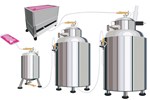
A wide selection of ion exchange resin is available in various particle sizes, ionic forms, and purity ranges to offer a variety of purification solutions for process applications. Nuvia ion exchange resins are a family of best-in-class ion exchangers built with exceptionally high capacities and excellent purification capabilities, providing process developers more flexibility and higher productivity. The Macro-Prep are rigid macroporous hydrophilic resin meet the demands of process-scale applications. Chemically and mechanically stable, the resin operate well at low and medium pressures.

DOWNSTREAM PROCESSING MULTIMEDIA
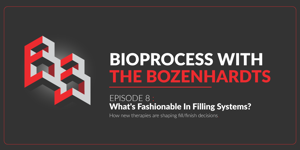
Bioprocess With The Bozenhardts is back, with a fresh episode packed with advice from Herman and Erich on the selection of filling systems for biopharmas. Listen in as the Bozenhardts give us an update on the process, logistics, and administration trends that are informing filling system decisions today, and offer direction on making choices that will prepare you for the fast-advancing therapies of tomorrow.

Bio-Rad now offers two very high capacity ion exchangers: Nuvia S, which can be used for capture and/or intermediate polishing; and Nuvia Q, which can be used for intermediate and/or final polishing.