
ABOUT US
Repligen is a bioprocessing-focused life sciences company bringing over 40 years of expertise and innovation to our customers. We are inspiring advances in bioprocessing through the development and commercialization of high-value products and flexible solutions that address critical steps in the production of biologic drugs, principally monoclonal antibodies.
Repligen headquarters is in Waltham, Massachusetts and our manufacturing facilities are located around the world. We market our products globally through a direct commercial organization in the U.S., Europe and Asia, as well as through strategic partners in select markets.


UPSTREAM BIOPROCESSING
-

Explore how intensified perfusion strategies enable rapid, high‑density CAR‑T expansion, predictive scale‑down modeling, and efficient automated harvest, supporting shorter timelines and higher yields.
-

Perfusion cell culture technology supports high cell densities and product yields for viral vaccine manufacturing, offering a reliable way to produce high-quality cells at a commercial scale.
-

The demand for complex biologics is driving the need for intensified cell culture technologies. Perfusion using ATF has emerged as a leading solution to increase cell density and productivity.
-

Learn about innovative cell retention technology that supports continuous bioprocessing through perfusion cell culture, allowing for longer run times, higher product yields, and reduced costs.
-

Discover how TFDF-based perfusion technology boosts lentiviral vector production by over 10-fold, slashes costs, and accelerates the commercialization of CAR-T and other advanced cell therapies.
DOWNSTREAM BIOPROCESSING
-

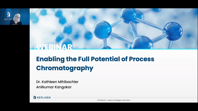
Real-time analytics can provide greater visibility into chromatography performance during scale-up, helping teams monitor purification, maintain critical process parameters and quality attributes.
-

Improve UF/DF repeatability by defining clear concentration and diafiltration endpoints, matching them with appropriate measurements, and applying real-time in-line analytics to reduce variability.
-

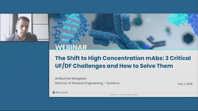
High‑concentration mAbs change how UF/DF behaves. Learn how modern TFF platforms help address these challenges and maintain control as formulations move beyond traditional limits.
-

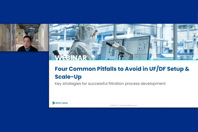
Learn how small UF/DF decisions can create major scale-up challenges, as well as practical ways to improve membrane selection, reduce manual operations, and boost PD–MSAT alignment.
-

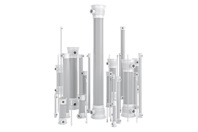
Enable consistent performance in ultrafiltration, diafiltration, and microfiltration with hollow fiber modules that offer robust construction and a wide range of sizes to meet shifting demands.

FLUID MANAGEMENT
-

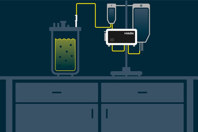
Thoughtful design at the bioreactor and ATF interface can reduce shear, simplify fluid paths, and conserve space. See how rethinking an overlooked valve assembly helped improve process efficiency.
-

Learn how automated, banded pH control uses dose-and-wait logic to limit overshoot, account for mixing and buffer effects, and maintain stable setpoints across changing fill volumes.
-

Mixing efficiency at scale depends on more than speed alone. Gain insight into data that reveals how fill levels and vortex formation impact homogenization time, offering practical guidance.
-

Discover how to prepare 10x PBS using an innovative system to ensure scalable, efficient, and consistent buffer preparation for large-scale workflows.
-

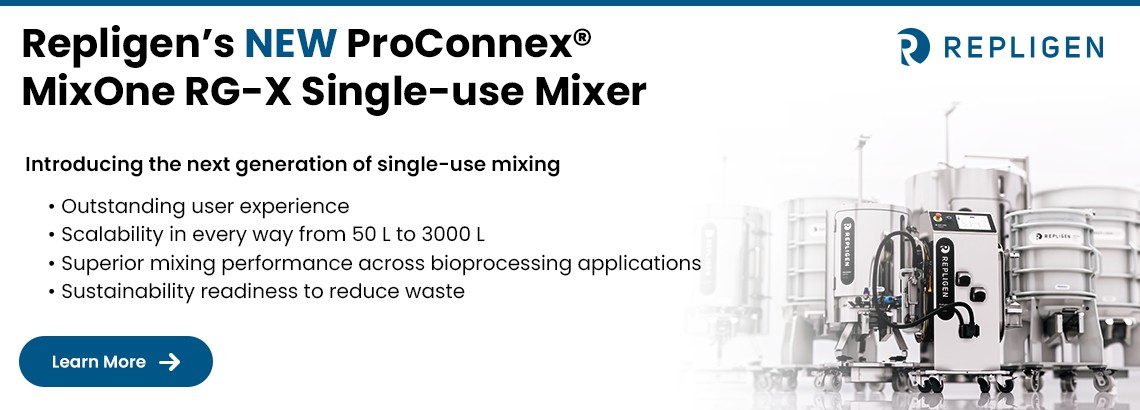
Engineered for biotech and biopharma, discover a single-use mixer that uses advanced technology to deliver scalable, sterile, and efficient mixing for critical cleanroom applications.

PROCESS ANALYTICS
-

Maintaining consistent DAR while reducing risk and variability remains a major ADC challenge. Learn how real‑time spectroscopy replaces dilution‑heavy workflows and strengthens process control.
-

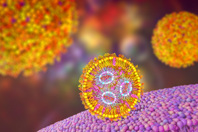
Learn how rapid, non-destructive techniques for mRNA quantification in LNPs can improve dosing accuracy, reduce variability, and accelerate decision-making for efficient scale-up and commercialization.
-

Discover how rapid amino acid profiling improves media insight, detects variability, and supports real-time optimization for stronger bioprocess control, as well as strategies to reduce risk.
-

Variability in amino acid levels across CHO media can affect growth and product quality. Learn why real-time monitoring and proactive control strategies are key to improving process consistency.
-

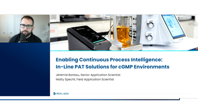
Learn how real-time monitoring and PAT platforms can streamline bioprocessing, reduce testing delays, and improve decision-making across upstream and downstream workflows.
CONTACT INFORMATION
Repligen
41 Seyon Street, Building 1, Suite 100
Waltham, MA 02453
UNITED STATES
Phone: 781-250-0111
FEATURED PRODUCTS
-

Designed for versatility throughout the bioproduction workflow with patented performance of Metenova® Zero Gravity mixing technology, now optimized for single-use applications. This cutting edge system offers unmatched performance, ease of use, and scalability for both Upstream and Downstream bioprocessing professionals seeking cost-effective, efficent, and easy-to-deploy solutions.
-

State-of-the-art flexible and rigid single-use bags engineered specifically for bioprocessing applications. Optimize handling and transfer of high-value liquids with our range of bottles, carboys, 2D bags, and 3D bags.
-

Game-changing TFDF® (Tangential Flow Depth Filtration) technology that simplify and intensify upstream viral vector bioprocessing, ideal for AAV, lentivirus, oncolytic, retrovirus, adenovirus, exosomes, and cells on microcarriers.
-

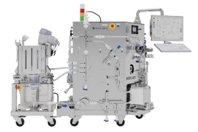
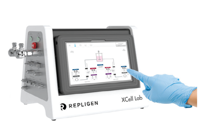
Simplify and intensify upstream bioprocessing. The XCell® ATF System, in single-use or stainless steel format, delivers superior cell retention. High impact upstream applications include N-1 perfusion, high productivity harvest, long-term perfusion and seed train intensification.
-

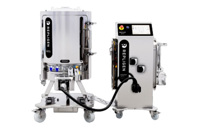
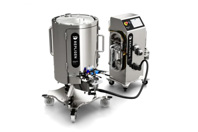
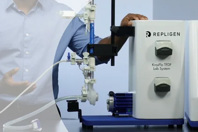
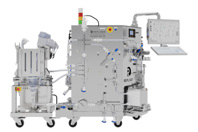
Meet the first bench scale TFF system built specifically for cGMP production with true end to end automation. The new KrosFlo RS 10 takes all of the components, controls, and capabilities of our highly compliant, commercial manufacturing large-scale TFF systems and brings it down to bench scale.
SOLUTIONS
-

Enable consistent performance in ultrafiltration, diafiltration, and microfiltration with hollow fiber modules that offer robust construction and a wide range of sizes to meet shifting demands.
-

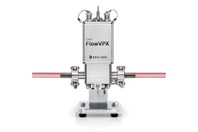
Gain real-time visibility into critical process parameters with in-line measurements that reveal details traditional sensors miss. See how this versatile design supports labs through production.
-

Discover an automated TFF platform for small volumes that streamlines filtration steps with fast setup, low hold-up volume, and consistent performance. Ideal for teams aiming to improve efficiency.
-

Meet the first bench scale TFF system built specifically for cGMP production with true end to end automation. The new KrosFlo RS 10 takes all of the components, controls, and capabilities of our highly compliant, commercial manufacturing large-scale TFF systems and brings it down to bench scale.
-

Simplify and intensify upstream bioprocessing. The XCell® ATF System, in single-use or stainless steel format, delivers superior cell retention. High impact upstream applications include N-1 perfusion, high productivity harvest, long-term perfusion and seed train intensification.
-

Game-changing TFDF® (Tangential Flow Depth Filtration) technology that simplify and intensify upstream viral vector bioprocessing, ideal for AAV, lentivirus, oncolytic, retrovirus, adenovirus, exosomes, and cells on microcarriers.
-

State-of-the-art flexible and rigid single-use bags engineered specifically for bioprocessing applications. Optimize handling and transfer of high-value liquids with our range of bottles, carboys, 2D bags, and 3D bags.
-

Designed for versatility throughout the bioproduction workflow with patented performance of Metenova® Zero Gravity mixing technology, now optimized for single-use applications. This cutting edge system offers unmatched performance, ease of use, and scalability for both Upstream and Downstream bioprocessing professionals seeking cost-effective, efficent, and easy-to-deploy solutions.
-

Engineered for biotech and biopharma, discover a single-use mixer that uses advanced technology to deliver scalable, sterile, and efficient mixing for critical cleanroom applications.
-

Learn about innovative cell retention technology that supports continuous bioprocessing through perfusion cell culture, allowing for longer run times, higher product yields, and reduced costs.
-

Boost product recovery and streamline operations with a single-use TFF system that combines automation and advanced hardware for higher yields, faster turnaround, and reduced manual steps.
-

Discover how innovative solutions can reduce production time, cut costs, and improve yields to ensure exceptional product quality at every stage of biologic drug development.
-

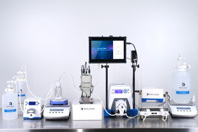
Learn about a system that enables simple, fast, cost-effective, and scalable upstream intensification development. It delivers precise flow rates, even at high cell densities and viscosities.
-

Rapid protein characterization and metabolomic analysis with microfluidic technology for highly efficient separations of complex samples. Simplify sample preparation, reduce analysis time, and achieve faster results with the ZipChip CE-MS device.
ZipChip CE-MS device efficiently separates and seamlessly introduces samples into your mass spectrometer with electrospray ionization (ESI). Common challenging analyses are made easy, including protein separation for biopharmaceutical critical quality attributes (CQA), Charge Variant Analysis, and metabolite quantification from biological matrices. Experience a powerful alternative to liquid chromatography mass spectrometry (LC MS).
-

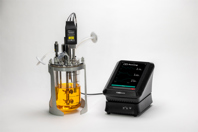
Get faster process insights and dynamic control of substrate feeding without the loss of bioreactor or fermenter volume.
Keep Your Cells Happy
Fluctuations in glucose levels, associated with infrequent measurements and bolus feeding, may cause metabolic deregulation and undesirable process deviations.
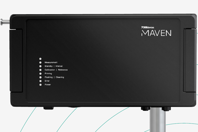
That’s where MAVEN comes in. It has your back, automatically monitoring and controlling glucose and lactate concentrations, helping you realize your PAT strategy.
-

This easy-to-use process analytical technology device offers in-line bioprocess analysis and control with no complex modeling. Measure multiple critical parameters across media, across processes, across mammalian cell lines, across scales.
All In-line Gain, No Modeling Pain
MAVERICK is powered by Raman spectroscopy and a purpose-built de novo model. The de novo model is explicitly built on media chemistries and device physics, not on empirical data. It automatically interprets the spectra and quantifies process parameters enabling simultaneous measurements of glucose, lactate, and total biomass. This is achieved without the costs, complexities, and risks associated with conventional Process Analytical Technology (PAT) methods. There is no need to grapple with complex empirical models, reagents, or unreliable auto-sampling systems to implement in-line bioprocess analysis.
-

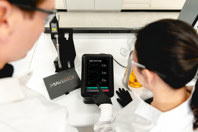
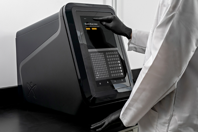
Waiting weeks for cell culture media analysis results is a thing of the past. With REBEL’s at-line analysis capabilities, you can assess over 30 media components in less than 10 minutes. Instead of sending samples to the lab, get the data where and when you need it.
-

Monitor in real-time and control your glucose and lactate concentrations during cell culture and fermentation to achieve process efficiency and optimal productivity.
-

Learn about a purpose-built de novo model for simultaneous real-time measurements of multiple key process parameters in mammalian cell cultures without the pitfalls of conventional methods.
-

In this comparison of dry and liquid CHO media composition, review differences of up to 20% on various components, with liquid media containing higher concentrations than dry media. CHO media composition can significantly impact cell production and growth at these levels.