INSIGHTS ON DOWNSTREAM MANUFACTURING
-
 GMP Reagent Enables 10x Improvement In MSC-EV Downstream Processing Recovery
Filter fouling during EV purification can eliminate over 95% of your starting material. See how a novel GMP-compatible reagent changes the recovery equation entirely.
-
 Separation Of A GLP-1 Receptor Agonist And Structurally Similar Impurities
Structurally similar impurities can be difficult to separate in GLP-1 therapeutics. See how column chemistry influences selectivity and supports more confident profiling for peptide-based drugs.
-
 A Unified Development Blueprint For Accelerating Timelines: DNA To DS Bulk Fill In 8.5 months
Learn how early integration of cell line engineering, process development, and analytics compressed a complex antibody program from DNA to drug substance bulk fill in just 8.5 months.
-
 Process And Optimization") In Vitro Glycoengineering (IVGE) Process And Optimization
In Vitro Glycoengineering (IVGE) Process And OptimizationLearn how cell-free, post-fermentation glycoengineering separates glycan optimization from protein yield, offering tighter control over N-linked glycan structures in therapeutic proteins.


-
Pushing The Boundaries Of Chromatographic Separation7/29/2026
Metal-sensitive analytes often suffer from poor recovery and distorted peak shapes. Learn how inert hardware improves sensitivity and chromatographic performance for challenging analyses.
-
Single-Use Solutions For Critical Fluid Management Workflows7/27/2026
Discover how single-use technologies support critical fluid management workflows across bioprocessing, cell and gene therapy, and blood management, enabling efficient handling, storage, and transfer.
-
Beyond Flexibility: The Strategic Value Of Single-Use In Virus Filtration7/24/2026
Single-use virus filtration offers key strategic benefits beyond operational convenience, enabling faster time to market, scalable manufacturing, and flexible supply chains for biopharma production.
-
Single-Use Virus Filtration: Controllers And Systems For Modern Bioprocessing7/24/2026
Modern single-use virus filtration automates critical processing steps, slashes turnaround times, and optimizes scalability across bioprocessing workflows.
-
Introducing The Next Revolution In Sterile Disconnect Technology7/20/2026
Streamline downstream bioprocess teardown with high-flow, non-spill disconnect solutions designed to resist harsh chemicals and protect closed system fluid lines.
DOWNSTREAM MANUFACTURING SOLUTIONS
-

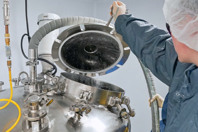
cGMP liquid solutions streamline upstream and downstream bioprocessing. Reclaim cleanroom capacity, enhance process consistency, and reduce contamination risks from development to commercial production.
-

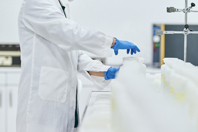
Choose the right level of clean for bioproduction storage and transport, with options designed to help manage particulate, endotoxin, sterility and material requirements across critical workflows.
-

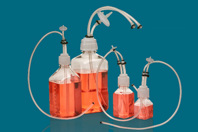
Simplify fluid transfer workflows with ready-to-use, gamma-irradiated bottle assemblies designed to reduce setup, cleaning, and contamination concerns across media or buffer transfer applications.
-

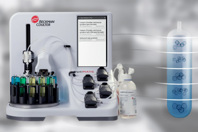
Automated gradient preparation helps reduce variability and improve reproducibility. Learn how pre-formed gradients, guided workflows, and standardized methods can streamline purification processes.
-

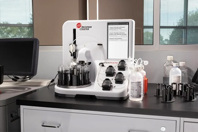
The OptiMATE Gradient Maker simplifies the laborious and error-prone density gradient centrifugation process into an easy-to-maintain operation by automating nearly all pre-centrifuge steps, including gradient preparation, accurate dispensing, and tube sealing, significantly reducing run times without sacrificing purity or yield. The OptiMATE Gradient Maker has achieved the ACT label in the US, EU, and UK.