With a foundation in cell culture that dates back to 1970, FUJIFILM Biosciences is a global, full spectrum supplier to the life sciences market, providing products and services that assist customers in advancing healthcare initiatives. With an expanding portfolio of applications supported that include life science and discovery research, cell and gene therapy, as well as the large-scale production of biotherapeutics and vaccines, the Company is trusted by researchers and manufacturers worldwide.
For over 50 years, FUJIFILM Biosciences’ Mission has been to empower all who bring medicines and treatments to life with unmatched quality and responsiveness in its products and custom solutions, providing customers with the vital resources needed to enrich human lives through innovative, accessible therapies. The Company’s facilities adhere to both ISO and FDA regulations, with manufacturing facilities that follow cGMP guidelines in the USA, Japan, and the Netherlands, and a media optimization center in China.
All sites prioritize strategies that adhere to the FUJIFILM Sustainability Value Plan 2030 for sustainable growth. FUJIFILM Biosciences is a subsidiary of FUJIFILM Holdings America Corporation reporting to FUJIFILM Holdings Corporation.
For more information, please visit: fujifilmbiosciences.fujifilm.com
FEATURED INSIGHTS
-
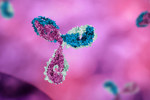
 How mAbs Have Transformed Breast Cancer Treatment, And Where Is It Going Next
Monoclonal antibody therapies are reshaping breast cancer treatment. Explore the latest manufacturing advances and research solutions helping developers accelerate therapy production at every stage.
-
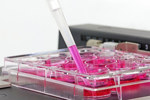
 Patient-Derived Organoids For Cell Therapy Development
Patient-derived organoids offer a more accurate way to test cell therapies by preserving the complex tumor environments that determine whether these treatments will actually work.
-
 Moving Beyond Animal Models With iPSC-Based Models
Animal models are giving way to iPSC-based systems that better reflect human biology, offering researchers a more accurate and ethical path to drug discovery.
-
 Modeling Neurodegenerative Disorders: Where Are We Now?
Neurodegenerative disease research faces a critical gap between symptom management and disease modification, making better preclinical models an urgent priority for the field.
-
 From 2D To Organ-On-A-Chip: Platforms Powering Modern Disease Models
Disease modeling has evolved well beyond animal studies, and understanding which platform fits which research question is now a critical skill for modern biology teams.
-
 How Recombinant LAL Reagents Differ From Each Other
Two types of recombinant endotoxin testing reagents are now available, each with distinct regulatory standing across pharmacopeias and implications for global method validation.
-
 Sterile Water Manufacturing And QC Testing
Understanding which USP water monographs require bacterial endotoxin testing, sterility testing, or both helps laboratories select the right methods and avoid compliance gaps.
-
 Chemically Defined Medium For Intensified AAV And LV Production In HEK293 Cells
Discover how a chemically defined medium designed for suspension HEK293 perfusion cultures supports intensified AAV and LV production processes, with viable cell densities exceeding 10^8 cells/mL.
-
 How Raw Materials, Media Composition, And Process Decisions Shape Advanced Cell Therapies
Learn how variability in patient-derived starting materials, serum dependence, cytokine selection, and platform lock-in create downstream risks that proactive process design can help prevent.
-
 Predicting The Performance Of Perfusion Media In A Continuous Bioreactor
Small-scale perfusion-mimic models can effectively predict media performance in continuous bioreactors to help optimize cell density, productivity, and scalability for CHO cell lines.
-
 High-Throughput Screening For High-Performance Cell Culture Media Development
Learn about a high-throughput screening method that successfully optimized cell culture media, leading to a greater than 3-fold improvement in viral genome titer for AAV2 production.
-
 Advanced Approaches For Developing And Optimizing Perfusion Platforms
Discover how to effectively use small-scale perfusion-mimic systems to identify optimal cell culture media and significantly increase volumetric productivity for large-scale biomanufacturing.
-
 Scalable Strategies For Intensified Viral Vector Production In HEK293 Cell Culture
Learn a strategy for scalable bioprocessing and media optimization that drives intensified viral vector production. Achieve high cell density, excellent viability, and consistent AAV titers from 50mL to 5L.
-
 Chemically Defined HEK293 Viral Feed Boosts Viral Vector Production
Discover how a chemically defined viral feed can boost AAV titers by up to 8-fold, supporting multiple serotypes and both suspension and adherent HEK293 cell lines, simplifying scalability.







CONTACT INFORMATION
FUJIFILM Biosciences
1830 E. Warner Avenue
Santa Ana, CA 92705-5505
UNITED STATES
Phone: 949-261-7800
Fax: 949-261-6522
NEWS
- FUJIFILM Biosciences And NextCell Launch New Commercial Platform Comprised Of RUO Stromal Cells And Cell Culture Media
- FUJIFILM Biosciences Introduces BalanCD HEK293 Perfusion A Medium To Enable Gene Therapy Production
SOLUTIONS
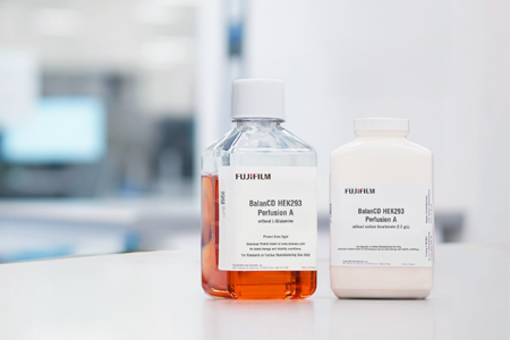 Achieve A New Level Of Viral Vector Productivity
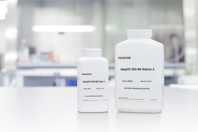
Maximize your viral vector output with a chemically defined medium engineered for high cell density HEK293 perfusion and intensified processes, optimizing efficiency and product integrity.
-

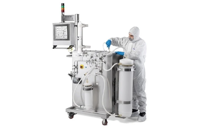
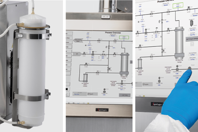
Automated buffer and media preparation is reshaping bioprocessing operations, offering over 50% time savings, reduced labor demands, and safer floor-level handling compared to traditional methods.
-

Learn about an automated hydration system that replaces manual powder prep with a closed-loop, single-use skid designed to cut turnaround times and reduce contamination risk in bioprocessing.
-

A novel CHO-MK cell culture medium and feed system designed for fed-batch biologics production, delivering titers up to 12 g/L in 4 to 7 days and 2 to 3x productivity gains over conventional methods.
-

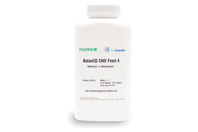
Scale up mAb production with confidence using an evolved CHO feed that simplifies hydration to three steps, improves media stability, and delivers consistent titers across multiple CHO subtypes.
-

Consistent MSC research starts with controlling variability. Cell sourcing and optimized cryopreservation strategies can improve process control for umbilical cord-derived cell therapy development.
-

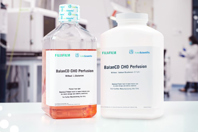
Support the growth and productivity of CHO cells in perfusion culture systems with a chemically defined, complete, and ready-to-use medium.
-

Optimize your mesenchymal stromal/stem cell (MSC) workflow with advanced media for robust expansion, reliable differentiation, and preserved cell viability post-cryopreservation.
-

This xeno- and serum-free media and supplement pairing provides consistent, high-yield expansion of MSCs from various tissue sources while maintaining their critical phenotype.