INSIGHTS ON UPSTREAM MANUFACTURING
-
 A Robust System For High-Titer, Platform-Agnostic AAV Production In HEK293 Cells
AAV titer and full capsid enrichment depend on tuning every process component, starting with the medium. Results across serotypes, reagents, and enhancers show how far a media-led approach can go.
-
 Maintaining Process Consistency And Performance During Scale-Up
See how an intensified N-1 perfusion process maintained stable cultures, reproducible cell expansion, and aligned mAb production across 5 L, 50 L, and 500 L scales while supporting viable cell densities.
-
 High-Throughput Binding Affinity Assessment Using Octet® HTX
Binding affinity screening of clones directly from crude supernatant, without purification, changes what can be assessed early, and a tiered workflow pairs broad throughput with deeper analytical characterization.
-
 Beyond Speed And Titer: Building Cell Lines For Long-term Development Success
Cell line development is often judged by speed and titer, but true readiness depends on manufacturability, analytics, stability, and regulatory support.




-
Strategic Frameworks For Cell Line Development: Long-Term Program Viability10/20/2026
Speed to cell bank alone doesn't predict success. Early decisions around manufacturability, analytics, stability, and regulatory strategy determine whether a program can scale.
-
How Can We Build Trust In Model-Driven Manufacturing?10/15/2026
Data is abundant, but turning it into trusted prediction is harder. Model-driven control depends on process understanding, organizational capability, and trust as much as technology.
-
Navigating One Of Biomanufacturing's Most Contentious Decisions10/15/2026
Single-use and stainless steel bioreactors share core engineering, so real differences lie in the operations. See how the development stage and commercial trajectory outweigh allegiance to either.
-
Amino Acids For cGMP Biopharmaceutical Manufacturing10/15/2026
cGMP-grade amino acids require more than chemical specifications. Documentation, supplier controls, traceability, and intended use shape suitability for regulated processes.
UPSTREAM MANUFACTURING SOLUTIONS
-

Integrated viral vector development, testing, and GMP supply, paired with engineered plasmids and cell lines to reduce scale-up risk and improve yield.
-

Optimizing vector, host, and process together can shorten the path from stable pool to GMP while keeping titers and quality consistent across 50L to 2,000L scales.
-

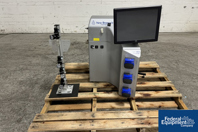
Used Eppendorf New Brunswick CelliGen BLU Bioreactor, Single Use Vessel/Stirred Tank Bioreactor, Uses Consumable Hard Plastic Reactor Vessels with Integrated Agitators, Servo Agitator Drives are Part of Main Controller, with Integrated Peristaltic Pumps, 120v, S/N BBLUDG702670
-

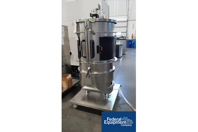
Used 200 liter Sartorius BioSTAT CultiBag bioreactor, model BIOSTAT CultiBag STR. 200-liter operating volume, 300-liter container volume, serial# STR-0015, with Sartorius Stedim stirred single-use bioreactor touchscreen controller, model BIOSTAT CultiBag STR Plus. Includes (6) peristaltic heads, capacity up to 1,000 liters, serial# 00132/09.
-

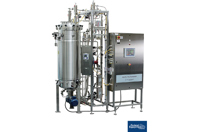
Unused, Eppendorf BioFlo bioreactor/fermentation System. Includes (1) 240 L BioFlo Pro fermenters and (1) 1,200 L BioFlo Pro fermenters. Complete fermentation systems, including vessels, controls, automation, gas mixing, CIP/SIP capabilities, sensors, pumps, validation, and supporting utility hardware. Spare parts kits and utility/regulator kits.