INSIGHTS ON FACILITY DESIGN
-
 All You Need To Know About GMP Manufacturing Of mRNA-LNP Drug Products
Moving mRNA-LNP production from lab to GMP scale exposes tensions among formulation consistency, regulatory expectations, and facility safety, while automation offers ways to resolve them.
-
 Building A Flexible Vaccine Manufacturing Facility With Tonix Pharmaceuticals' Siobhan Fogarty
In this episode of "Better Biopharma," host Tyler Menichiello is joined by Tonix Pharmaceuticals' chief technical officer, Siobhan Fogarty, to discuss the planning and construction of its manufacturing facility in Dartmouth, MA, which was purpose-built for the production of its horsepox-based live viral vaccine platform, TNX-801.
-
 Designing Flexible Multi-Product Manufacturing For Biopharma
See how thoughtful facility planning can turn limited space into flexible manufacturing capacity, supporting multiple products, meeting current demand, and preparing operations to adapt as needs change.
-
 Inside Look At A Fruit Fly Biomanufacturing Facility | Future Fields Instar 1.0 Biofactory
Achieve reliable, on-demand protein production with a manufacturing approach that minimizes scale-up risk from R&D through commercialization.



-
Characterization Of PFAS Extractables In Gas Filtration Devices9/29/2026
Understand how fluorinated membrane chemistries in sterilizing grade gas filters may introduce PFAS risks, and how extractables testing can support contamination control strategies.
-
Evaluating Modular CAR T Manufacturing Workflows9/28/2026
As CAR T manufacturing scales, balancing throughput, flexibility, and cell quality becomes increasingly complex. Explore strategies for improving process control, reducing bottlenecks, and more.
-
Reliability By Design For Single-Use Bioprocessing9/27/2026
Success in single-use bioprocessing depends on design, supply, validation, and compliance. Learn how these factors support reliable, scalable, and resilient operations.
-
Achieving Unmatched Accuracy And Compliance In Pressure Sensing9/27/2026
Discover how advanced pressure sensing can improve measurement accuracy, simplify system design, and support more efficient, sustainable bioprocessing.
-
SaniSure Clamp Pre And Post Gamma Extended Leak Tightness Study9/27/2026
Pressure and gamma irradiation testing demonstrated consistent, leak-tight connections without re-tightening for stored single-use assemblies.
FACILITY DESIGN SOLUTIONS
-

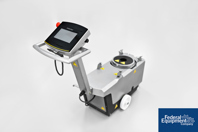
Unused Sartorius Pro Mixer Drive unit for Sartorius Palletanks, built 2022.
-

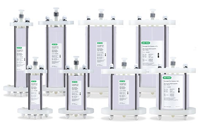
Explore prepacked, GMP-ready columns designed for scalable biopharmaceutical manufacturing, delivering stable packed beds, low asymmetry, and robust performance.
-

A small automation shop focused on cell therapy manufacturing grew into a platform covering equipment, consumables, software, and industrialization services for commercial-scale production runs.
-

Organize gowns, personal protective equipment, and essential records with durable cleanroom storage to reduce contamination risks and streamline daily Good Manufacturing Practice workflows.
-

A range of purpose-built accessories extends the utility of the RoSS® shell system across freezing, transport, sampling, and handling workflows in biopharma manufacturing.