ABOUT THERMO FISHER SCIENTIFIC
Thermo Fisher is a leading global provider of bioprocessing solutions. We simplify the development path and accelerate our customers’ innovations to bring therapies to patients, faster. With our comprehensive portfolio of products and services we are a dedicated partner throughout the biological drug development journey.
Key Capabilities:
- Media and buffer preparation
- Cell expansion
- Cell culture production
- Harvest
- Capture and polish chromatography
- Viral inactivation, filtration, and QC testing
- Bulk storage, fill, and finish
- cGMP chemicals and supply chain services
- Expert professional support to meet process, scale, quality, and regulatory requirements
WEBINARS AND VIDEOS





-

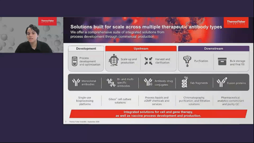
Learn how flexible modular workflows can help manufacturers improve process adaptability, throughput, and control while preserving key CAR T quality attributes, including transduction efficiency.
-

Increasing scrutiny around particulate contamination is pushing teams to act earlier. Understanding where risks originate and applying proactive strategies can ease challenges across production.
-

In this opening segment from the Bioprocess Online Live event, “The Levers And Tradeoffs That Drive Process Productivity,” panelists David Scherr, Ph.D. (AstraZeneca) and Vadim Klyushnichenko, Ph.D. (Calibr-Skaggs), discuss what metrics matter the most to evaluate productivity and measure process performance.
-

In this segment from the Bioprocess Online Live event, “The Levers And Tradeoffs That Drive Process Productivity,” our panelists respond to an audience poll and answer audience questions about hollow fiber membranes and process modeling approaches. They agree that productivity gains emerge from a comprehensive understanding of the process and the tools that enable it.
-

In this segment from the Bioprocess Online Live event, “The Levers And Tradeoffs That Drive Process Productivity,” panelists David Scherr, Ph.D. (AstraZeneca) and Vadim Klyushnichenko, Ph.D. (Calibr-Skaggs), discuss the biggest opportunity to improve process yield and performance: reducing chromatography steps and unlocking efficiencies downstream.
-

In this segment from the Bioprocess Online Live event, “The Levers And Tradeoffs That Drive Process Productivity,” panelists David Scherr, Ph.D. (AstraZeneca) and Vadim Klyushnichenko, Ph.D. (Calibr-Skaggs), answer the question, “What should developers be thinking about upstream to avoid downstream complications?” Klyushnichenko believes process-wide considerations like this begin earlier than cell line development at the product’s molecular construct itself.
-

Some things are intrinsic, unchanging realities of a process — molecular complexity, product developability, and facility fit, to name a few. In this segment from the Bioprocess Online Live event, “The Levers And Tradeoffs That Drive Process Productivity,” panelists David Scherr, Ph.D. (AstraZeneca) and Vadim Klyushnichenko, Ph.D. (Calibr-Skaggs), discuss these “non-pullable levers” of process development and advise teams on how to work within their boundaries.
-

In this segment from the Bioprocess Online Live event, “The Levers And Tradeoffs That Drive Process Productivity,” panelists David Scherr, Ph.D. (AstraZeneca) and Vadim Klyushnichenko, Ph.D. (Calibr-Skaggs), discuss how the process-related associated with next-generation molecules like bispecifics and trispecifics complicate downstream purification efforts impurities (e.g., chain mispairings). They agree that mitigating these impurities is a developmental challenge both upstream and downstream.
-

In this segment from the Bioprocess Online Live event, “The Levers And Tradeoffs That Drive Process Productivity,” panelists David Scherr, Ph.D. (AstraZeneca) and Vadim Klyushnichenko, Ph.D. (Calibr-Skaggs), reflect on the progress that’s been made in terms of productivity gains and the “ceiling” that mAbs face, and how these upstream gains stress downstream operations. They also discuss how molecular complexity relates to challenges in purification.
-

In this segment from the Bioprocess Online Live event, “The Levers And Tradeoffs That Drive Process Productivity,” panelists David Scherr, Ph.D. (AstraZeneca) and Vadim Klyushnichenko, Ph.D. (Calibr-Skaggs), discuss the potential of perfusion and continuous manufacturing to improve productivity through smaller facility footprints and greater output over time. They also examine the challenges associated with these approaches, including cell-line stability, process monitoring, and the cost of operational mistakes.
-

Intensified upstream processing can improve scalability and maintain quality. Learn how automation, PAT, and data-driven control strategies help modernize workflows and support consistent performance.
-

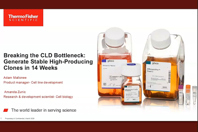
Rising complexity is putting pressure on cell line development. Discover a streamlined approach that enables rapid generation of stable clones with strong titers and long-term consistency.
-

Residual DNA quantitation offers more than impurity measurement. When used across process steps, it helps compare purification performance, identify risks early, and ensure assays remain reliable.
-

Increasing mAb complexity is pushing purification beyond traditional platforms. See how flexible chromatography, optimized buffers, and adaptable workflows are becoming essential to achieve target purity.
-

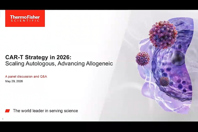
As CAR-T advances, shifting clinical progress and market dynamics are reshaping development strategies. Explore how evolving therapies and operational demands are redefining the next wave of innovation.
-

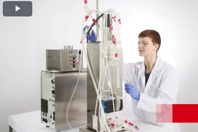
From lab to production scale: a researcher's firsthand account of what bioreactor scaling and high-density perfusion really demand in practice.
-

Learn how a structured, scalable approach to process development can help improve productivity, maintain product quality, and support a smoother transition to manufacturing.
-

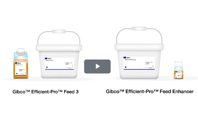
Up to 146% higher protein titers in CHO-K1 culture. See how advanced feed technology and animal–origin–free formulations are redefining what consistent protein production looks like.
-

See how the right biotech products, workflows, and technical expertise help teams accelerate development and bring life-changing therapies from lab to commercial reality.
-

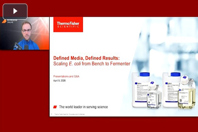
Understand the benefits of chemically defined media in E. coli systems, explore real-world plasmid DNA data, and learn practical strategies for scaling to robust manufacturing.
-

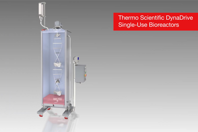
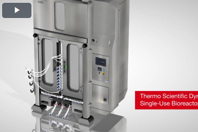
Explore DynaDrive Single-Use Bioreactors through expert videos covering reactor design, mixing performance, sparge technology, and scalable workflows from bench-scale to commercial production.
-

Single-use assembly design is evolving fast. Learn how scalable platforms, digital automation tools, and global supply networks are converging to support sustainable biopharma manufacturing at scale.
-

Uniform bubble size and consistent mass transfer across scales through drilled-hole sparge technology improves oxygen delivery and CO2 stripping in demanding cell culture processes.
-

Single-use bioreactors with turndown ratios up to 20:1 enable facilities to operate across wide volume ranges within the same vessel, streamlining seed trains and reducing capital requirements for multi-product operations.
-

Consistent vessel design, sparging, and bag materials across 1L to 5,000L volumes enable predictable bioreactor scale-up from development through commercial manufacturing.
-

Cuboid bioreactor design eliminates vortexing through natural baffling, delivering homogeneous mixing and consistent nutrient distribution for high cell density upstream processes.
-

PFAS-free bioreactor film technology provides proven biocompatibility and strength across workflows while simplifying validation and reducing material variability for compliant operations.
-

Hear from industry experts on how teams can integrate manufacturability considerations earlier through rapid prototyping, data-driven media development, and predictive modeling.
-

Explore five key advantages of single-use bioreactors, including scalable design, homogeneous mixing, broad chemical compatibility, and streamlined seed train processes for bioproduction success.
-

Learn about manufacturing solutions that streamline cell culture media scale-up with global production capabilities, equivalency strategies, and quality assurance for reliable supply.
-

See how this kit accelerates clone development to 14 weeks with ≥7 g/L protein titers while reducing costs through royalty-free commercial licensing for therapeutic applications.
-

In this final segment from the Bioprocess Online Live event, “Protecting Bioprocessing Operations and Supply Chains In A Turbulent Economy,” panelists Adam Golin, Jon Lindbloom, and James Sapirstein share their advice and best practices for sourcing suppliers and staying agile during periods of change in the industry.
-

In this segment from the Bioprocess Online Live event, “Protecting Bioprocessing Operations and Supply Chains In A Turbulent Economy,” panelists share their thoughts on what it means to be resilient and how organizations can embody resilience in their biomanufacturing, which in part requires agility and preparation for the worst-case scenario. The panel was in agreement that earlier-phase companies have the highest opportunity to bake resilience into their operations.
-

In this segment from the Bioprocess Online Live event, “Protecting Bioprocessing Operations and Supply Chains In A Turbulent Economy,” panelists explain how tariffs imposed by the U.S. are putting competitive pressure on companies to reduce COGs. They also discuss the short- to long-term impact of efforts to onshore biomanufacturing.
-

In this segment from the Bioprocess Online Live event, “Protecting Bioprocessing Operations and Supply Chains In A Turbulent Economy,” our panel discusses how the still-high cost of materials and equipment is being factored into manufacturing decisions, as well as how the COVID-19 pandemic changed the way operators think about supply chains.
-

In this opening segment from the Bioprocess Online Live event, “Protecting Bioprocessing Operations and Supply Chains In A Turbulent Economy,” panelists Adam Golin, Jon Lindbloom, and James Sapirstein speak candidly about how U.S. tariffs are affecting the global operating environment.
-

Explore how unique cuboid geometries and advanced mixing dynamics create consistent performance from the bench to commercial manufacturing, ensuring flexibility and improved productivity.
-

Boost your mAb manufacturing efficiency by mastering upstream and downstream intensification strategies. Learn how to minimize cost and time while increasing overall productivity.



















CONTACT INFORMATION
Thermo Fisher Scientific
7305 Executive Way
Frederick, MD 21704
UNITED STATES
Contact: Hunter Tuck
FEATURED SOLUTIONS
-

Evaluate more CHO media combinations with less internal screening burden. Examine a workflow that identifies and verifies high-performing conditions within 10 to 12 weeks.
-

See how intensified capture, polishing, inline dilution, and integrated chromatography can ease downstream bottlenecks and support scalable mAb purification while maintaining product quality.
-

Higher cell densities can strain harvest operations. See how integrated centrifugation and chromatographic clarification may reduce solids, improve efficiency, and support scalable processing.
-

Increase mAb output without adding capacity. See how intensified seed and production strategies can shorten timelines, reduce manual handling, lower facility burden, and improve productivity.
-

Particulate control starts with practical decisions. Learn how material selection, acceptance criteria, and operator handling practices can help reduce contamination risk and support stronger quality.
-

Choose the right level of clean for bioproduction storage and transport, with options designed to help manage particulate, endotoxin, sterility and material requirements across critical workflows.
-

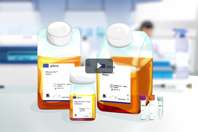
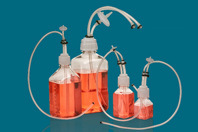
Simplify fluid transfer workflows with ready-to-use, gamma-irradiated bottle assemblies designed to reduce setup, cleaning, and contamination concerns across media or buffer transfer applications.
-

Modular manufacturing strategies can support scalable T-cell processing while maintaining key quality measures. Explore how workflow design choices can help balance efficiency and performance.

FEATURED INSIGHTS
-

Adherent multilayer vessels let PSC cultures scale without changing familiar media and handling, but coating volumes, seeding density, and harvest recovery all need rethinking.
-

Next-generation antibody formats require more precise purification strategies. Explore how subdomain-specific VHH ligands can address structural heterogeneity, improve purity, and preserve stability.
-

Gain insight into how combining centrifugation with targeted depth and chromatographic clarification can reduce filter demand, ease facility constraints, and support efficient mAb harvest.
-

Explore how process optimization can address downstream mAb manufacturing bottlenecks, reduce labor and consumable costs, and support more efficient production without compromising performance.
-

See how integrated upstream and downstream intensification strategies can increase monoclonal antibody yield, streamline workflows, improve facility utilization, and reduce manufacturing costs.
-

Membrane design and filtration capacity affect pressure, throughput, and scale-up. See how comparative testing reveals opportunities to reduce required filtration area, capsule use, and changeouts.
-

Looking beyond unit price reveals how reliability, leak prevention, and shelf life affect bioprocessing costs. Make purchasing decisions that support resilient and predictable operations.
-

Discover how working volume, material type, and solids behavior affect single-use mixing performance, with practical findings on blend times, homogeneity, analytical methods, and agitation rates.