
Top 5 Challenges In Antibody-Oligonucleotide Manufacturing
By Ian Glassford, VP of Bioconjugation Development & Technical Excellence
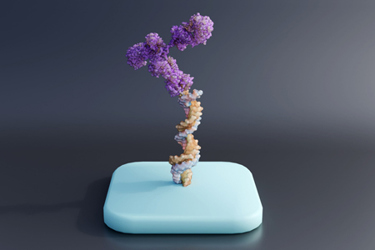
Antibody-oligonucleotide conjugates (AOCs) combine the targeting precision of antibodies with the gene-modulating power of oligonucleotides, short nucleic acids that can silence, splice, or redirect gene expression. The clinical validation is real: Avidity's AOC 1001 reached Phase III for myotonic dystrophy and earned FDA Breakthrough Therapy designation in 2024, Dyne Therapeutics submitted a BLA for z-rostudirsen (DYNE-251) in exon-51 Duchenne muscular dystrophy in 2026, and Novartis moved so fast it paid $12 billion to acquire Avidity. But the biology being elegant doesn't make the manufacturing simple. According to Ian Glassford, VP of Bioconjugation Development and Technical Excellence, there are five specific points where AOC programs break, and they're not always where you'd expect. Oligonucleotide synthesis generates impurities that don't behave like small-molecule impurities, conjugation chemistry introduces variability that compounds downstream, and analytical methods developed for antibodies or oligonucleotides alone often fail to characterize the conjugate adequately. Getting ahead of these challenges means understanding them before they surface in your program. Access the full analysis to see where AOC manufacturing most commonly stalls and what technical preparation actually looks like.
Get unlimited access to:




Enter your credentials below to log in. Not yet a member of Bioprocess Online? Subscribe today.