
The Use Of Differential Scanning Calorimetry And Modulated Differential Scanning Calorimetry To Study Material Interactions Of APIs And Excipients
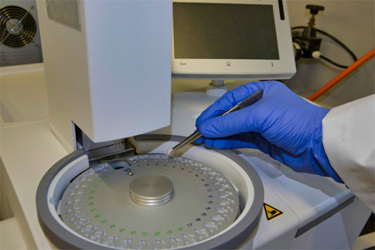
Differential Scanning Calorimetry (DSC) and Modulated DSC techniques provide powerful insights into the compatibility and stability of pharmaceutical materials. By analyzing heat flow and heat capacity changes, these methods reveal interactions between active pharmaceutical ingredients (APIs) and excipients, which can impact formulation performance. This examines acetylsalicylic acid combined with magnesium stearate and sucrose, highlighting how particle size and morphology influence material behavior. Results show that reducing sucrose particle size can induce amorphous regions, altering thermal stability and interaction potential. Extended isothermal aging experiments further demonstrate how morphology affects recrystallization and glass transition development. Understanding these thermal responses is critical for predicting long-term stability and optimizing drug formulations.
Explore the full application note to see how DSC and MDSC can uncover hidden compatibility issues and guide material selection.
Get unlimited access to:




Enter your credentials below to log in. Not yet a member of Bioprocess Online? Subscribe today.