
Sustainable Facility Design Brings Bayer Instant Savings
A conversation between Regina Donaldson at Bayer and Life Science Connect's Jon O'Connell
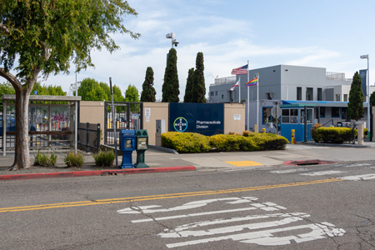
Sustainable facility design often presumes spending more up front for savings on energy and maintenance down the road. Bayer's Berkeley, California, Cell Therapy Launch Facility, which came online in 2023, challenges the assumption by showing that some sustainable choices provide immediate savings.
The site has already earned global attention, and it won the ISPE's Facility of the Year Award (FOYA) for sustainability in 2025. Bayer received LEED v4 Platinum certification, a rating system by the U.S. Green Building Council, for meeting a baseline of sustainability prerequisites and earning additional optional credits related to energy, materials and waste, water, and human health and experience indoors.
Regina Donaldson, Bayer’s sustainability lead at the facility, says greater sustainability does not necessarily mean greater cost. Although meeting LEED’s demanding requirements is complex, calculations for some utilities showed significant savings.
Bayer originally aimed for a lower LEED tier, not Platinum, the system’s highest classification. As Donaldson explains, the project team later determined that the top tier was within reach. She's scheduled to share the facility’s LEED journey next month at the 2026 ISPE Annual Meeting & Expo, and she agreed to give us a preview.
Readers might be more familiar with LEED for sustainable commercial and residential construction. Why did Bayer pursue LEED v4 certification over another green building framework better geared toward industrial manufacturing?
Donaldson: Bayer chose LEED v4 certification because LEED’s building rating system is mostly recognized globally. Many industrial professionals are familiar with LEED’s framework used to design and construct sustainable green buildings and its rating of action credits to achieve green certification levels. Also, LEED can be used for all types of projects and various phases such as new construction, core and shell, and operations and maintenance optimizations.
The Bayer Berkeley site prioritized building new facilities to be more efficient and partnered with engineering, procurement, and construction (EPC) vendors that have the expertise to realize our aim to build and operate our facilities more sustainably. Pursuing the LEED v4 certification pushed the team to lean deeper into sustainability and data transparency. For example, being LEED v4 certified, we have more material transparency within life cycle assessment and material ingredient reporting, as well as ensuring entire building energy metering and submetering. Bayer aims to have products that have low carbon footprints and are manufactured within a LEED v4 certified facility.
How did the certification process change the way you approached decisions compared to if you set out to build the most environmentally conscious facility without a formal framework?
Donaldson: The project team used Bayer’s green building framework as a starting point. Because many best practices listed in LEED’s framework are aligned with Bayer’s green building framework, that simplified design plan creation. Since Bayer originally aimed to meet LEED Gold certification requirements, the features identified were evaluated to yield options to make the building more environmentally friendly. However, LEED’s requirements went beyond the building’s core, shell, and utilities construction and included materials that would be used and operations efficiency once the building became fully operational. These conditions required the project team to collaborate with product teams to brainstorm beyond the construction phase. The team learned that multiproduct flexibility and facility flow coupled with good manufacturing requirements added complex layers to designing an environmentally focused facility without compromising compliance.
Did you need to forgo any points categories altogether simply because they're not attainable under GMP standards?
Donaldson: No, Bayer did not forgo any points categories due to GMP standards. The building’s layout was carefully designed to ensure that GMP requirements would be met. Technologies and equipment proposed were evaluated to ensure that the service provided would meet expected user requirement specifications. Also, in cases where GMP dictated required configurations to be used, the team ensured they were implemented and looked for other opportunities to maximize the sustainability LEED credits.

Conversely, which design choices gave you the greatest benefit in terms of LEED points?
Donaldson: The greatest opportunity to collect the most LEED points centered around the energy category. The project team wanted to design high-performing, but low energy-intensive, technology throughout the facility without compromising future operations. Some common practices included installing 100% LED lighting throughout, using an electric steam boiler to generate plant steam instead of connecting to the centralized plant steam generation facility that uses natural gas, and installing rooftop solar panels to generate clean electricity. However, the greatest technology success for the project was installing four-pipe heat pumps that were the first for Bayer and one of the first in the Western U.S.
For many of our readers, pursuing LEED certification is out of reach; however, they still want to make sustainable facility design decisions. How would you advise a company to proceed outside of the formal certification framework?
Donaldson: I suggest first asking what outcome the facility is trying to achieve. There are different LEED certification levels and criteria to consider or you can at least use LEED or other green building guidelines as a framework. Think of actions and technologies that are simple but impactful, low cost, and easy to implement and maintain. Research sustainable and efficient technologies that are both new and established. Connect with industry counterparts and forums that can provide guidance on facility designs that are proven and even low cost. There is a wealth of resources that can be tapped into to implement sustainable designs and achieve one’s construction sustainability goals.
What does the ROI runway look like for Platinum certification? One of LEED's bigger draws is lower energy and maintenance costs down the road. Will that materialize for the Cell Therapy Launch Facility?
Donaldson: There are many layers within this project that influence the ROI, and achieving LEED Platinum certification did not necessarily mean paying more for technology to increase the credit. For example, heat pumps were installed instead of connecting to the centralized steam generation that uses natural gas for HVAC processes. This is a new technology implemented within Bayer, especially at the Berkeley site.
The team evaluated the cost and construction time and concluded that implementing the heat pumps would reduce the construction time by 16 weeks and cut utility installation cost in half, or by $5 million. Several benefits have materialized since becoming operational: avoided increased carbon emissions, reduced water consumption if connected to the centralized chilled water and tower water systems, and reduced future maintenance costs since the heat pump units are fewer in number with fewer parts compared to conventional systems.
Talk about the switch from LEED Gold to Platinum. Why change certification levels partway through?
Donaldson: As the project progressed with identifying and finalizing sustainable features, it became more visible that we could achieve LEED Platinum certification with a few more credits that were not difficult to implement. As previously stated, the energy category not only implemented efficient technology but also enabled the building to achieve 52.6% energy cost savings that allowed us to achieve the maximum 18 points for the optimized energy efficiency credit. This was a strategic design decision that was made during the construction phase with a no-risk, positive impact.
About The Expert:
 Regina Donaldson is a site sustainability lead and site energy manager at Bayer bringing nearly two decades of experience overseeing infrastructure and utilities and sustainability. She received a B.Sc. in mechanical engineering and an M.Sc. in chemical engineering from the University of Dayton.