
An Open-Source Modeling Tool For Suspended Continuous Lyophilization
A conversation between Prakitr Srisuma and Life Science Connect's Jon O'Connell
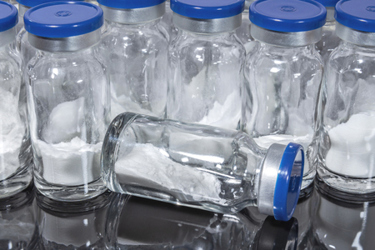
A new twist on a well-established method, continuous lyophilization approaches are attracting attention because they can improve equipment use, support automation, and reduce the interruptions that complicate process control common in traditional batch methods.
Prakitr Srisuma, a former postdoc in Richard Braatz's MIT lab, created a mechanistic model, or digital twin, for a suspended-vial technology previously described in the literature. In that setup, vials move through dedicated process zones while suspended, rather than sitting on shelves inside a conventional batch freeze dryer. The design gives vials a defined process path through freezing and drying, helping developers evaluate how chamber configuration, vial velocity, heat transfer, mass transfer, and formulation properties interact.
Continuous lyophilization, however, requires a different way of linking equipment design, process trajectory, and product behavior. Srisuma’s model, available to the public on GitHub, captures freezing, primary drying, and secondary drying, and it can be used to predict key variables such as product temperature, ice and water fractions, sublimation behavior, and bound water concentration.
For formulation and process teams, the open-source files offer a starting point for testing assumptions before running extensive experiments.
We had some high-level questions for Srisuma about what the model does, which parameters matter most, and how developers can use the tool to better understand continuous lyophilization design.
What's the main headache that pharma manufacturers face with batch lyophilization that continuous modeling solves?
Srisuma: First, the main headache is not that batch lyophilization does not work. It works, and industry has used it for decades. The real issue is that it is slow, expensive, and difficult to control uniformly across all vials, and that makes things like scale-up more challenging.
In this work, we looked at the suspended-vial technology developed by Luigi Capozzi et al. (2019). To be clear, I did not invent the suspended-vial technology; I developed a model/digital twin for it. When the process is operated continuously, the downtime is minimized, resulting in a higher production capacity. In addition, since the process is not frequently interrupted like in batch or semi-batch processes, more consistent process and quality control can be obtained. Continuous processes are also easier to fully automate. For this suspended-vial technology, specifically, the design allows for more uniform heat transfer in the system, which is one of the key challenges in conventional batch lyophilization that has high spatial heterogeneity within the lyophilizer. The equipment was designed in a modular fashion, facilitating process scale-out. To increase the production capacity, simply add more lyophilization modules to the system.
Can you describe what happens in suspended-vial continuous lyophilization compared to legacy batch methods, which are well-characterized and supported by decades of data?
Srisuma: In legacy batch lyophilization, each vial stays in one location and the process changes with time: freezing, primary drying, and secondary drying, all inside the same general equipment environment. The shelf temperature and chamber pressure are changed over time, and the batch waits until the entire population of vials reaches the desired endpoint.
In short, fixed location — process changing with time.
In suspended-vial continuous lyophilization, the vial moves through the process, and different parts of the equipment are designed for different steps. Vials are suspended and move continuously through freezing and drying chambers, without any contact with the shelf. That means all vials experience exactly the same spatial process trajectory. The system can also include a dedicated chamber for controlled nucleation, which helps reduce the randomness of freezing.
In short, location changing with time — fixed process.
You list more than 50 parameters. Is there a subset of those parameters driving the most uncertainty in predictions? If so, how should industry prioritize measuring them?
Srisuma: The table lists all parameters in the model, but most of them are known. For example, operating conditions (e.g., pressure, temperature) are always known or can be directly specified. Thermophysical properties (e.g., density) are also generally available from literature or supplier data. The only parameters that need to be estimated from data are the heat and mass transfer coefficients and desorption kinetic parameters, as explained in Section 3.6 of the paper. Industry should prioritize these parameters.

On that note, your model is demonstrated on a generic biopharmaceutical formulation. Is modality-specific tuning required?
Srisuma: Yes. As the product changes, the properties also change. This includes all the thermophysical properties, heat and mass transfer coefficients, and desorption kinetic parameters. Basically, the set of parameters that I described in previous answers.
How does the model guide design of optimal chamber length and vial velocity?
Srisuma: The model can accurately predict the freezing and drying times. Given the times required, vial size, and production capacity, the vial velocity and chamber length can be calculated straightforwardly.
You provide a condenser failure analysis. What other equipment failure modes should developers watch out for?
Srisuma: From my experience, I think condenser failure is probably the most common one. Another possibility (but less likely) might be heater failure, which can also be simulated by our model.
Any useful guidance for formulation developers who take your GitHub files back to their own process labs?
Srisuma: The user manual is provided on GitHub. My only suggestion would be: Do not treat the GitHub files as a black-box model. The model was developed mechanistically, so use them as a mechanistic framework that has to be connected to your own formulation and equipment. It is important to read and understand the paper.
About The Expert:
 Prakitr Srisuma is a process systems engineer and postdoctoral researcher at the Argonne National Laboratory. Previously, he was a postdoctoral researcher at MIT. He received his Ph.D. from MIT in computational science and engineering.