
A Gentler Cell Line Selection Method Using microRNA
A conversation between Susan Sharfstein at University at Albany and Life Science Connect's Jon O'Connell
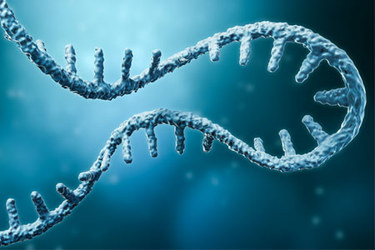
Researchers at the University at Albany are developing a new way to home in on the most productive cell lines with a method that avoids exhausting them in the process.
Currently, cell line selection requires a punishing round of antimetabolic drugs. The clones that survive get to move on, but in a weakened state requiring recovery time. Susan Sharfstein, Ph.D., a professor at Albany, has been working with structurally interacting RNA technology, a switch that uses microRNAs as a trigger, to speed up and optimize cell line selection. Since cells produce microRNA all the time, there's a de minimis metabolic load, which is quite different from the dosing they get during a typical selection cycle.
We met up with Sharfstein at the 2026 Bioprocessing Summit in Boston where she told us where the work stands and what needs to happen next before it's viable for cell line workflows in commercial settings. The interview has been edited for clarity.
Can you give us a little background on what structurally interacting RNA is? Specifically, what's happening when the trigger interacts with the vector?
Sharfstein: In nature, there are many three-way junctions. They happen when one piece of RNA binds to another piece of RNA, and that changes the three-dimensional structure. They're a big natural regulatory element. My colleague, Scott Tenenbaum, developed the structurally interacting RNA (sxRNA) technology when he and his co-author Frank Doyle came to realize that because you have this potential for structural changes when you bring in a second RNA molecule, you can use that in a regulatory way.
Nature also makes a lot of microRNAs. One of the things they're interested in, besides bioprocessing, is using this as a readout. For example, we often see that in disease states, you'll make a microRNA where one wouldn't be in a healthy cell. If you then can put in that signaling molecule, some sort of signal that changes, then you can identify healthy versus non-healthy cells, or you could use that molecule as a suicide molecule; you could potentially use it as a therapeutic.
So, it's not just an analytical tool.
Sharfstein: Right. But the reality is that in biomanufacturing, there's a lot of interest in different approaches. Part of this started because Nicole Borth, who is at BOKU in Vienna and does a lot of work on microRNAs in CHO cells, invited me to come and speak at a conference. I introduced her to Scott Tenenbaum, and the two of them came up with this idea: "Well, gee, maybe we could use these microRNAs for cell line selection."
Biologists think differently from bioprocess people. A biologist would ask, "Well, what about just a pool of productive cells?" Bioprocessing people would say, "Well, no, not just a pool, because the FDA says cell lines must be clonal, single-cell strains."
So, we're starting to think about how we do this in a clonal way, bringing together Scott's expertise in RNA, biology, biochemistry, and the whole of bioprocess in science. When we actually went to get funding, there was a lot of excitement from the National Science Foundation in looking for these new technologies.
For clone selection, what is it that makes it so much faster than the standard?
Sharfstein: In the standard practice, you're putting in some sort of selection drug, most commonly methotrexate or methionine sulfoximine, and killing off all the cells that don't have the appropriate marker, and then you have to wait for the population to recover. Here we're identifying the cells that make our transgene, we hope, or at least make the microRNA, without using any toxic molecules.
When you put in a toxic molecule, even the cells you don't kill off are subject to that stress and they have to recover. With our selection method, you've eliminated all that toxicity, and it's much faster.

Do we know whether the selected producers drift over passaging or during scale-up?
Sharfstein: We haven't done that with this concept. We did publish a paper in 2021 where we were doing something similar, looking at making an siRNA. That's a negative selection, which is not as nice. It's always nicer to look for the presence of something than for the absence of something. But when we did do that, we found that we did get better stability out for 12 passages, which is 50 or 60 days, so a fairly good period of time.
We still have to try it with an antibody-type construct. The plan is to put in a phase II SBIR (Small Business Innovation Research) grant in December, and hopefully that will pay for us to do those kinds of experiments.
In your experiments, you worked with CHO and you worked with antibodies. Does microRNA work for any other cell line types and any other type of protein?
Sharfstein: For this work, we did CHO cells and green fluorescent protein (GFP). In our previous studies, we did antibodies, as well as erythropoietin-Fc fusion proteins, and it worked fine. We also did it in NIH-3T3 cells and HuH-7 cells. We do know that it works under these situations.
And certainly, on the non-bioprocessing side, they're using this technology in all sorts of different cell lines. They're looking at it in salivary glands and neuronal cells, a wide range of things.
We think it's a broadly applicable technology. Certainly, the microRNA concept is uniform across all sorts of eukaryotic cells.
What's the upshot for labs looking to introduce microRNA as a selection tool into their processes?
Sharfstein: Our group still needs to demonstrate that the amount of microRNA we are making is directly correlated with the amount of gene of interest, because we don't want to just pull out cells that are making gene of interest — we want to be able to target the most productive cells.
Then we need to make sure we can demonstrate that the microRNA turns on the selection marker in a quantitative way. The gene of interest must correlate with microRNA and microRNA must correlate with level of expression marker so we can say: "If I sort for just the good green fluorescent protein, then I'm going to be making a lot of antibody."
That's what we need that phase II SBIR grant to do. If that's successful, then there's no need for drugs and things like that. No need for toxic molecules. We get a really nice readout that's rapid with a transient selection marker. You put in the mRNA selection marker that responds to the miRNA, the microRNA that’s co-transcribed with your protein product triggers it, and then the switch goes away. People have done it in the past – made GFP downstream, or they'll make a fusion protein that's got GFP on it with a leaky stop codon. But then you're always wondering: "Well, I'm making GFP all the time. Is there any GFP that's leaking?"
Here, you have no effect on the protein you're making. The protein you're making is the protein of interest. Everything that we're doing downstream, it's all RNA based, so it doesn't interfere.
About The Expert:
 Susan Sharfstein, Ph.D., is a professor at the University at Albany’s College of Nanotechnology, Science, and Engineering. She leads the Sharfstein laboratory, which is focused on the role of culture conditions and cell physiology and the use of living systems for industrially relevant processes.