
Want More Sustainable Biopharma Packaging? Try These Levers
By Jose Saiz de Omeñaca
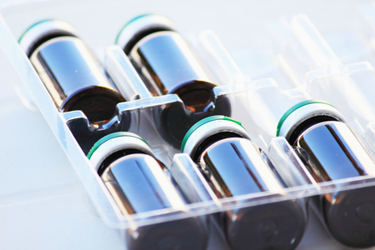
Packaging is an essential part of advanced therapy supply chains, but it is also an increasingly important sustainability challenge. Pharmaceutical products require packaging that protects them from contamination, light, moisture, oxygen, physical damage, and temperature excursions. For sterile products and cell and gene therapies (CGTs), the requirements can be even more demanding because product quality may depend on maintaining sterility, identity, potency, and tightly controlled environmental conditions throughout distribution.
These product-quality requirements are nonnegotiable, and meeting them — especially for sensitive products — could make sourcing sustainable packaging difficult or even impossible. This discussion will explore viable paths toward sustainability in primary, secondary, and cold-chain packaging. The environmental impact of pharmaceutical packaging occurs throughout its life cycle: raw-material extraction, material production, manufacture, transportation, use, and end-of-life treatment.
This article is part 2 of a series on sustainability in biopharmaceutical manufacturing supply chains.
Plastics are particularly important because fossil-fuel-derived polymers remain widely used in pharmaceutical packaging. Glass, aluminum, paperboard, and polymers each have different environmental profiles, meaning that material substitution should be based on life cycle assessment (LCA). Research into pharmaceutical packaging ecodesign1 has identified opportunities including reducing packaging size, eliminating unnecessary empty space, and improving distribution efficiency.
The sustainability challenge boils down to simple objectives: reduce the environmental footprint of packaging without:
- compromising internal and external features of the goods inside
- compromising regulatory compliance.
Packaging can also influence transportation emissions. A heavier or bulkier cold-chain system requires more energy to transport, while inefficient thermal packaging can increase the probability of temperature excursions and product loss. For high-value CGT products, this is particularly important. A failed shipment means not only additional environmental impacts from replacement packaging and logistics but also loss of a highly valuable product.
Sustainable packaging strategy, broadly speaking, should follow these steps:
- eliminate unnecessary material first
- optimize what remains
- select lower-impact materials
- establish effective recovery or reuse systems.
Despite its simplicity, or perhaps because of it, the old alliterative adage "reduce, reuse, recycle" applies here.
Reduce
Design and optimize packaging, including reducing carton size, eliminating unused space, lowering material thickness where technically possible, and combining components. LCA-based research supports smaller packaging formats and the avoidance of unnecessary packaging elements as important ecodesign opportunities.
Reuse
Reuse must be covered across the full life cycle because Reverse logistics, cleaning, refurbishment, and additional transportation bring their own environmental costs. For pharmaceutical applications, reuse systems also require appropriate qualification and quality controls. In the cold chain, shipping systems that can be returned, inspected, cleaned, and reused are particularly valuable.
Recycle And Redesign
Packaging should increasingly be designed with end-of-life management in mind. This means reducing unnecessary material combinations, avoiding difficult-to-separate components, and selecting materials compatible with recycling infrastructure.
Throughout this process, materials must continue to satisfy requirements for chemical compatibility, sterility, barrier performance, and stability.
Companies should establish packaging sustainability metrics covering material mass, recycled content, recyclability, carbon footprint, transport volume, reuse cycles, and end-of-life outcomes. Some examples of these metrics are:
- Carbon footprint (Scope 3): Measures greenhouse gas emissions generated during raw-material extraction, manufacturing, transport, and disposal.
- Recycled content percentage: Tracks the proportion of post-consumer recycled (PCR) or post-industrial recycled (PIR) material used versus virgin material.
- Recyclability rate: Calculates the percentage of packaging that can be practically and technically processed by recycling systems.
- Material circularity indicator (MCI): Scores a package from 0 to 100 based on how long it lasts, and its recycled or renewable content.
LCA can then be used to compare alternatives objectively. This prevents situations in which a packaging change reduces plastic consumption but unintentionally increases greenhouse gas emissions, water consumption, or transport impacts.
We can broadly divide pharmaceutical packaging into three interconnected levels: primary, secondary, and tertiary/cold-chain packaging.
Primary Packaging
Primary packaging is in direct contact with the medicinal product. Examples include glass vials, prefilled syringes, cartridges, ampoules, blister packs, and polymer containers.
The selection of primary packaging is driven by chemical compatibility, extractables, moisture and oxygen protection, light protection, sterility, and mechanical integrity. WHO2 guidance emphasizes that packaging must protect pharmaceutical products against environmental influences and biological contamination while avoiding adverse interactions with the medicine itself. For cell and gene therapies, these requirements can become more complex. Products may be highly sensitive to temperature, agitation, oxygen, or other environmental factors. Single-use systems and specialized containers can also generate significant quantities of polymer waste. So, simply switching to a different material may not be environmentally beneficial if the new material requires more energy to manufacture, increases packaging weight, or reduces product stability.
Secondary Packaging
Secondary packaging does not normally come into direct contact with the medicines. It includes cartons, labels, leaflets, protective inserts, and tamper-evident components.
This packaging has the most accessible opportunities for sustainability improvements. Packaging can potentially be made smaller, lighter, and easier to recycle. The use of recycled fiber, responsible paper sourcing, reduced inks, and elimination of unnecessary components can reduce resource consumption. Digitalization is another lever we can pull. Transitioning to electronic product information reduces paper consumption, with direct environmental impact.
Cold-Chain Packaging
Cold-chain packaging is particularly important for vaccines, biologics, and many cell and gene therapies. It may include insulated shipping containers, phase-change materials, gel packs, dry ice, or external shipping boxes.
The environmental footprint of this packaging can be substantial because performance requirements often result in large, heavy, and highly engineered systems. In addition, temperature-controlled distribution may increase energy consumption and, in some cases, reliance on air freight.
The World Health Organization's3 current vaccine shipping guidance specifically recognizes the need to balance environmental sustainability with maintaining required temperatures. It recommends water-based coolant packs or phase-change materials where appropriate and encourages the phasing out of dry ice except where ultra-low-temperature conditions require it.
European Regulations Offer A Framework For Sustainable Biopharma Packaging
In Europe, the recent development of regulations such as the Green Deal4 established the broader policy direction toward climate neutrality, resource efficiency, and a circular economy.
Sustainable packaging and product design are explicitly identified as components of this transition. The Packaging and Packaging Waste Regulation (PPWR)5 introduces harmonized requirements covering packaging design, composition, waste prevention, recyclability, and resource efficiency, applicable since Aug. 12, 2026.
Finally, the Ecodesign for Sustainable Products Regulation (ESPR)6 also introduces a framework for sustainability requirements and establishes the Digital Product Passport (DPP), intended to make relevant product information accessible digitally and improve traceability throughout the value chain.
References:
- Ecodesign approach for pharmaceutical packaging based on Life Cycle Assessment. Science of the Total Environment, 2022 - https://www.sciencedirect.com/science/article/abs/pii/S0048969721066432
- Guidelines on packaging for pharmaceutical products - https://cdn.who.int/media/docs/default-source/medicines/norms-and-standards/guidelines/regulatory-standards/trs902-annex9.pdf?sfvrsn=82b4c57d_2&download=true
- Guidelines for the international packaging and shipping of vaccines, sixth edition - https://learning.quamed.org/wp-content/uploads/2024/12/9789240015432-eng.pdf
- The European Green Deal - https://commission.europa.eu/strategy-and-policy/priorities-2019-2024/european-green-deal_en
- Packaging and Packaging Waste Regulation (PPWR) - https://environment.ec.europa.eu/topics/waste-and-recycling/packaging-waste/packaging-packaging-waste-regulation_en
- Ecodesign for Sustainable Products Regulation (ESPR) - https://eur-lex.europa.eu/eli/reg/2024/1781/oj/eng
About The Author:
 Jose Saiz de Omeñaca is a pharmaceutical executive with 25 years of experience in procurement, supply chain, and operations in pharma, CDMO, industrial, and retail environments, with experience in medium and large companies, as well as in transformation and operational improvement projects. He received a Master of Business Management from Instituto de Empresa (IE) and a Master of Supply Chain at Universidad Carlos III de Madrid. He serves as an expert with UN/CEFACT, part of the United Nations Economic Commission for Europe. Email him at josesaizmonzon@yahoo.com. Connect with him on LinkedIn.