
VCN Determination In Gamma-Retrovirus CAR-T Cells Using Multiplex QIAcuity® dPCR
By Selen Abanuz Eren1, Danna Paulina Orozco Gomez1, Dirk Geerts1, Kavitha Sivasubramaniyan1, Anne Schieren2, Philipp Rink2, Corinna Hochstein2, Anida Mesihovic Karamitsos2, Miroslav Vraneš2 ; 1 Department of Hematology, Amsterdam UMC, VUmc, Research and Diagnostic Center, Amsterdam, The Netherlands 2 QIAGEN GmbH, Hilden, Germany
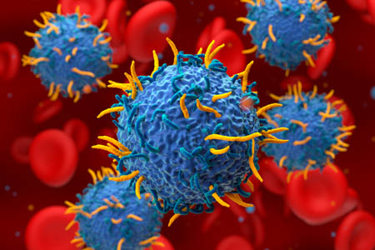
Accurate vector copy number (VCN) determination is a critical quality attribute in CAR‑T cell manufacturing, particularly for gamma‑retroviral systems where safety and regulatory limits must be carefully controlled. Walk through a flexible digital PCR workflow that enables simultaneous measurement of viral, transgene, and human reference targets in a single reaction. By combining validated reference genes with custom assays for the Psi packaging element and CAR transgene, the approach supports reliable VCN quantification across singleplex, duplex, and fourplex formats. Performance data demonstrate strong linearity, reproducibility, and dose-dependent VCN scaling across different multiplicities of infection. The workflow also demonstrates robust multiplex performance with minimal optical cross-talk and strong agreement between viral and reference targets, supporting accurate quantification even in complex assay formats. Practical guidance on assay design, multiplex optimization, and troubleshooting makes this workflow well-suited for both process development and routine testing.
Explore how multiplex dPCR can streamline VCN analysis while maintaining the rigor required for cell therapy workflows.
Get unlimited access to:




Enter your credentials below to log in. Not yet a member of Bioprocess Online? Subscribe today.