
Ultra-Sensitive Calorimetry - One Of The Best Kept (And Advanced) R&D Secrets
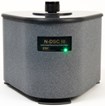
A traditional science – calorimetry – has advanced far beyond the capabilities once known to science and industry. Today, ultra-sensitive calorimetry is a significant technique for the molecular-level researching and testing of futuristic, lifesaving products.

Remember when you performed your first calorimetric test? Perhaps it was the classic Styrofoam cup test, or the more sophisticated bomb (combustion chamber) calorimeter that allowed you to measure heat changes on large samples with remarkable accuracy. In fact, the bomb calorimeter was a standard apparatus used in scientific and industrial laboratories for many years.
Ironically, today's ultra-sensitive calorimetry is instrumental in analyzing and developing pharmaceutical and polymer products, and saving researchers, chemists and engineers such extensive time and money that it might seem one of the best kept secrets in product development today.
Modern calorimetry has transformed and advanced to such a degree that today its acute sensitivity and flexibility has made it an indispensable tool throughout the life sciences. Ultra-sensitive calorimetry now plays an integral role in biotechnology, providing researchers with essential information on the thermodynamics, structure, stability and functionality of proteins, nucleic acids, lipids, and other biomolecules. Ultra-sensitive calorimetry is a vital tool for R&D in pharmaceuticals, genetics, energy, materials – in almost any area where the measurement and controlled manipulation of substances and interactions is required at the molecular level.

Ultra-sensitive calorimeters enable researchers and product developers to gain thermodynamic information that was previously difficult or even impossible to gain with earlier models or by other techniques. The capabilities of advanced, ultra-sensitive calorimeters are enormously helpful because of the amount and accuracy of the data they extract, as well as their abilities to obtain these data using very small samples.
"One advantage of calorimetry is that you don't have to immobilize, or add chromophores or make any modifications to ligands or macromolecules in order to test materials," explains Rusty Russell, [Vice President of Sciences] at Calorimetry Sciences Corporation (Lindon, UT), a leader in consultation, design, and the development of calorimetric instrumentation. "You simply put your material in solution exactly as it would occur in its normal state."
Conversely, using techniques such as spectroscopy requires researchers to use some sort of chromophore, something that can be detected in order to follow a reaction. When such modifications are made to a biopolymer or the environment in which it is being tested, the results may not be the same as would occur in a normal state.
"It is highly advantageous to put a biopolymer into solution so it is "folded up" in the natural state, instead of being chemically modified, and in an environment that is similar to the environment of interest," Russell says. "Because an ultra-sensitive calorimeter enables you to do that, you extract more reliable information from the test."
Sensitivity is a byproduct of sample size, signal-to-noise, and baseline stability. Today's calorimeters incorporate new control capabilities that produce baseline stability that previously has not been available. This control also makes the instrument less susceptible to external environmental influences, and with the pressure control capabilities built into the newer models the instruments are now appropriate for the study of volumetric properties (pressure perturbation) of biopolymers.
A good example of the usefulness of ultra-sensitive calorimetry in biotechnology is in the development of new pharmaceuticals. "Because many new drugs are proteins, they have stability issues," explains Russell. "Even if you had a drug that would cure everything, if it was thermally unstable, it could have a shelf life that would render it useless. Therefore, you would be very interested in obtaining the best data possible showing the stability of your compound. With that information you can optimize that stability and achieve the necessary shelf life. Today's calorimetric instruments make this possible."
Two of the most popular and reliable ultra-sensitive calorimetric techniques are Differential Scanning Calorimetry (DSC), and Isothermal Titration Calorimetry (ITC). Both principles are designed and optimized for analysis of biomolecules in solution, and are widely used in academic, research and industrial laboratories throughout the world.
DSC measures heat as a function of changing temperature. It is typically used to discern a wide range of thermal transitions in biological systems and the thermodynamic parameters associated with these changes.
ITC is typically used for monitoring a chemical reaction initiated by the addition of a binding component, and has become the method of choice for characterizing biomolecular interactions.
"Traditionally DSC has been used for stability," Russell says. "This is especially useful to the pharmaceutical industry in the design of advanced drugs. You can make modifications to a compound or its buffer, and then determine whether the modification stabilized or destabilized the compound."
ITC is the most popular type of ultra-sensitive calorimetry today. In the pharmaceuticals area, this technique is used in the testing of drugs that target a very specific target in the human body, possibly a particular gene or receptor. "One of the most common uses of ITC is to monitor interactions," Russell says. "It enables you to measure the energy of those interactions and how tightly a ligand will bind to a gene or receptor." Various biomolecular interactions can be studied using ITC, such as protein-ligand, protein-protein, protein-DNA, antibody-antigen and so forth.
Russell says that while ITC is particularly suitable to follow the energetics of an association reaction between biomolecules, the combination of ITC and DSC provides a more comprehensive description of the thermodynamics of an associating system.
Calorimetry Sciences Corporation (CSC) manufactures a variety of instrumentation and supporting software, including nanoWatt level DSC and ITC instruments that are specifically designed for Life Sciences and Pharmaceutical Sciences. These calorimeters are optimized for sensitivity and repeatability. They are power compensation calorimeters with cells that are fixed-in-place.
CSC also manufactures Isothermal and Scanning calorimeters equipped with removable cells. The flexibility of removable cells allows samples that are solid, suspensions, slurries or liquids to be investigated in the instrument. With a CSC isothermal calorimeter with removable cells the same device can be used to study interactions of solutes with immobilized enzymes, tissue samples, or other solid materials in suspension, or to obtain analytical or kinetic data for slow reactions.
The CSC Multi-cell Differential Scanning Calorimeter (MC-DSC) is a work horse calorimeter designed for a broad range of applications that are not possible to measure in the nanoWatt level DSC. The cell design of this device easily accommodates solid as well as liquid samples. The MC-DSC can collect data on three samples in a single experiment.
CSC products range from power compensation calorimeters for looking at biopolymers in dilute solution to online temperature rise calorimeters used to solve production problems in the blow molded plastics industry. CSC also provides consultation, design, and the development of custom instruments for specific, specialized applications.
SOURCE: Calorimetry Sciences Corp.