
The Stepwise Path Lilly Mapped From Paper To Digital Logbooks
A conversation with Scott Slavens, Eli Lilly and Company, and Life Science Connect's Jon O'Connell
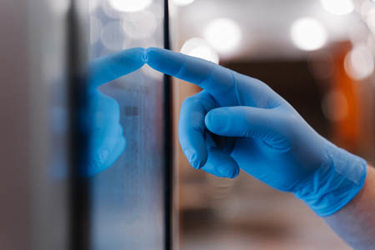
If you're going paperless, no doubt you're targeting logbooks and batch records. They might be the most meaningful places to work, with the potential to remove thousands of pounds of paper from workflows. They can also be the most daunting.
In its global switch to digital logbooks, Eli Lilly and Company is taking a frontline-first approach, bringing in shop floor-level users at the beginning and, anticipating inevitable future adjustments, incorporating change control from the jump, Lilly's IT Director Scott Slavens said in a written interview.
Some of the greatest efficiencies digital records bring come from their simplest features, which should feel familiar to anyone who's filled out a form online — you can't move on until all required fields have text in them. That means noncompliant records villains like missing signatures should fade significantly, if not go away entirely.
Slavens, along with Gilad Langer from the company's frontline interface vendor, Tulip, described their transition case study at the 2026 ISPE Europe Annual Conference in Copenhagen. Slavens answered some of our questions about the project.
Can you discuss the trade-offs between the digital efficiencies of going paperless and the sustained effort of maintaining a validated state?
Slavens: The efficiency gains are real — fewer transcription errors, faster review cycles, and real-time data availability. But the validated state doesn't sustain itself. Every upgrade, configuration change, or new interface reintroduces risk that must be assessed and, in some cases, revalidated. We built change control and validation competency into the program from the start, and that's what makes the long-term efficiency gains stick.
In a stepwise rollout, what milestones did you establish during the pilot and global implementation phases, and which proved most difficult to conquer?
Slavens: The pilot milestones were straightforward — requirements locked for specific shared processes, application development with gap analysis to processes across multiple sites, and then real-life use on the shop floor. Sites where we engaged floor-level personnel early, as subject matter experts rather than end users, moved through that transition faster than the ones where the rollout felt top-down.
How do you categorize the reduction in manual errors? For instance, does Lilly see fewer missing signatures or out-of-specification calculations?
Slavens: Completeness errors — missing signatures, omitted fields — are anticipated to drop sharply because the system won't let you close a record without them. Transcription errors are largely eliminated where we have upstream system integration.

The demands for original and complete documents in 21 CFR 211 were enshrined for a more analog world. What does the audit trail look like in your platform, and how do you define original records for dynamic logbooks?
Slavens: The original record is the first-captured, timestamped entry — nothing is overwritten. Every subsequent action is additive: edits, annotations, review signatures, all attributed with user credentials, timestamp, and reason for change. For dynamic logbooks that accumulate entries across a use cycle, we align with the FDA's Part 11 interpretation — the original is the static data captured at the moment of entry, and anything after that is attributed and preserved alongside it. In practice, the audit trail is more granular and tamper-evident than paper ever was.
When you record a cleaning deviation, does it automatically flag the associated batch record? Talk about the ways digital logbooks advance other interdependent systems.
Slavens: Yes — that's one of the highest-value integrations we have. A cleaning deviation triggers a signal to the associated batch record, and depending on classification, it can put a hold in place before the next campaign starts. The linkage is bidirectional, so a reviewer can move from product to equipment history and back without manually reconstructing anything. The result is a real-time equipment status model — you can see at any point whether a piece of equipment is clean, in calibration, and free of open deviations before it's assigned to a campaign. That used to require aggregating information from multiple systems.
Have you encountered regulatory inspectors who still expect physical records? Is there room to educate them on why digital metadata provides a more truthful record than the physical output?
Slavens: We have not during our digitization journey, but we do anticipate that paper will still be needed for regional regulatory requirements.
About The Expert:
 Scott Slavens is an IT director at Eli Lilly and Company where he serves as the strategic and program lead for the digitization of manufacturing sites, overseeing initiatives to modernize plant operations, expand data accessibility, and accelerate site-level technology adoption as a key enabler to streamline and standardize business processes. He has executed the vision and strategy for delivering enterprise-scale data capabilities, including cloud modernization, AWS platform enablement, and UI DevOps transformation at Eli Lilly.