
The Roadmap To Outsourcing Vial Fill/Finish
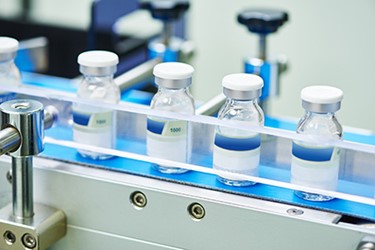
Outsourcing a fill/finish project can be a challenging journey. There are many tasks to complete, and there is no formal guide as to the “right” path. In our experience, there are several key milestones along the way that determine your outcome. Identifying beneficial industry trends, starting at the right time, and selecting the best CDMO partner are all critical tasks to complete. This article will guide you through the fill/finish roadmap to success.
Stay Informed on Industry Trends
Keeping up with the latest industry trends and best practices is an integral part of the fill/finish outsourcing process. Sponsors need to be aware of new technologies that could benefit the project, as well as current trends in CDMO capacity. A major trend in pharma currently is small-batch production for targeted therapies. This is dramatically increasing the demand for CDMOs to manufacture small-volume, high-dollar-value drug substances. And perhaps more importantly, demand has grown for CDMOs that can fill these valuable APIs without major loss of product. New high-yield technologies may be greatly beneficial to seek out if your project involves an expensive API. Similarly, risk-mitigating technologies such as isolators that eliminate operator intervention are worthy CDMO evaluation criteria.
Supply for these high-yield services has not yet caught up with demand. The lead time for a CDMO to design, install, and qualify a new filling line can often be more than three years. Given the multi-million-dollar expense the CDMO must take on to do this, capacity will continue to grow at a very slow pace. Understanding the limitations on available capacity can aid in your decision of when to start selecting a CDMO partner. Identifying the right filling equipment for your API and booking your CDMO early provide a good start to your outsourcing project.
Start Planning Early
According to the ISR report Sterile Injectable Drug Product Manufacturing Market Overview and Outlook, 37% of companies begin their search for a CDMO partner in the preclinical stage. In later stages, changing manufacturing processes can be incredibly difficult for a CDMO to accommodate. Selecting a manufacturing partner early allows for discussion of procedures and components before they are finalized at later stages.
Why do more companies not begin their search in the preclinical phase? False perceptions exist that spending time early on manufacturability and processes is a waste of time. However, early planning can actually speed production by avoiding preventable roadblocks later.
Assemble Your Team
The team a sponsor assembles to identify and work with a CDMO is critical to the success of the project. Teams should consist of personnel from quality assurance, executive management, manufacturing, procurement, outsourcing, and R&D. However, not all departments have equal weight in the CDMO selection. According to the previously mentioned ISR report, quality assurance narrowly outweighs executive management as the most influential department when evaluating suppliers for outsourced sterile injectable manufacturing.
It will be crucial to your project to establish connections between equivalent departments at your company and the CDMO. Strong communication between client and CDMO enables the project to move at the fastest pace and be executed correctly. The ultimate goal is to foster a “your company is my company” attitude from the supplier. Future projects with the same sponsor and CDMO teams can benefit from the established rapport, making subsequent outsourced projects easier to complete. In order to build this strong intercompany communication, you will want to select a manufacturing partner that encourages and facilitates interaction.
Select Your CDMO Shortlist
While CDMO selection overall is a lengthy process, the first step is to determine the capabilities you need and the broad category of contract manufacturer you would like to work with. “The customer needs to be aware of the limitations of the contract manufacturer they are evaluating,” recommends Chris Duffy, COO of Argonaut Manufacturing Services. He specifies that sponsors should look out for older facilities and equipment, as well as processes that are not in line with quality expectations.
Your initial evaluation should include:
- Facilities and equipment suited to your API, delivery format, and scale
- Available capacity
- Timelines for tech transfer and production
You also need to determine which type of CDMO matches best with your project and team. Several broad categories exist to choose from:
Niche CDMOs are experts in specific aspects of drug manufacturing as these are their sole focus. They are the most likely to be up to date on the latest regulations and technologies. The trade-off is that they may not offer the full range of services your project requires.
Large/end-to-end CDMOs are also very familiar with the latest industry standards. However, they may be slower to replace aging facilities and equipment with newer lines designed for smaller batches. This can mean that they are less well-positioned to support expensive APIs.
One-stop-shop CDMOs, just like their name implies, claim to offer all the services a sponsor requires under one roof. While this can be beneficial in terms of convenience, it may come at the cost of diminished focus or less specialized equipment.
There are many organizations to choose from in each of these categories, and more evaluation is still required to select your final partner. After creating a shortlist, the next step is to fine-tune your evaluation criteria and compare those against what each CDMO offers.
Finalize Your CDMO Selection
Once a shortlist of potential suppliers has been identified by your team, you will need to determine the criteria used to decide between them. One point that is always considered is negative regulatory history. FDA 483 forms are publicly available documents that showcase past regulatory compliance issues. However, a 483 may not be a deal-breaker depending on how the CDMO responded to it and if they are currently in good standing with the FDA. The biggest red flag would be recurring and/or identical 483 letters, which shows the CDMO is not properly addressing problems and implementing corrective actions. For CDMOs with limited or no FDA inspection history, sponsors can examine their Qualified Person (QP) inspections to judge regulatory compliance. In these cases, it can be helpful to evaluate the experience and track record of senior personnel as well.
Facilities, equipment, and processes can sink your project if they are not correct, so it is very important to stringently evaluate them. Consider the level of risk your project can tolerate. Is your API limited and expensive, or is it easily produced? The former is best suited to high-yield, low-risk equipment and processes, while the latter can be successful even with a lower-tier supplier. If you have a high-value API, you should look for closed systems like isolators or RABS that protect the product. Some suppliers now offer specialized equipment to maximize filling yields. Be sure to request detailed specs on the equipment each CDMO would use for your project.
Capacity is often overlooked at this stage, but missteps can translate into lost time and revenue. If the manufacturing organization you selected has no short-term capacity, you will be forced into the choice between finding a replacement CDMO or waiting until capacity becomes available. This sensitive point should be discussed early to avoid missed timelines. A related evaluation factor is agreement of both parties on timelines. As an example, if the project requires capital expenditure such as new equipment or change parts, the implementation timeline must be agreed upon by both parties. This is also a good test of how you and the potential CDMO communicate, which is key to a smooth process.
The Road Ahead
With your internal team assembled and a CDMO selected, you are well on your journey to successfully outsourcing a fill/finish project. Next, you will draft and negotiate a quality agreement with the supplier. Often both the sponsor and the CDMO will have their own standard template, and the final agreement will be a compromise. Key factors to address include establishing notification processes and supplier management. Tech transfer for the fill/finish and analytical methods will begin soon after.
Regardless of whether you are a seasoned outsourcer or are working with a CDMO for the first time, you can set yourself up for success. Keep abreast of industry standards, build a strong internal team, and select the right manufacturing partner to set your project on track. Knowing the best equipment and timelines for your project can help avoid common roadblocks. With a clear roadmap for outsourcing fill/finish, you are ready to start your journey.
About Argonaut Manufacturing Services
Argonaut Manufacturing Services is an ISO 13485:2016 cGMP contract manufacturing organization dedicated to providing custom manufacturing and supply chain solutions for biopharmaceutical companies. Argonaut features state-of-the-art automated aseptic fill-finish equipment for sterile injectable drugs. Projects are supported by a full analytical quality control service offering and global shipping logistics. Argonaut provides a wide range of flexible solutions for diverse outsourcing needs.