
Sample-Attribute-Based Selection Strategies For AAV %Full Determination
By Wonil Chae, Abigail De La Peña, Junhee Han, Jaehwan Sim, Seunghoo Moon, and Daeun Kim, Samsung Biologics
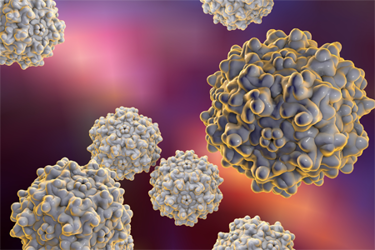
Determining AAV %Full requires distinguishing full, empty, and partial capsids while accounting for differences in sample purity, concentration, matrix composition, and capsid heterogeneity. Because analytical methods assess these populations through different principles, results may vary in resolution and applicability across crude harvests, in-process samples, drug substance, and drug product. AUC is widely regarded as the gold standard for %Full analysis because of its reliability and high resolution, making it valuable for detailed characterization of capsid heterogeneity. However, its practical demands can limit use for routine, high-throughput process development. Orthogonal methods can address different analytical needs: SEC-MALS provides complementary information on particle size and composition, mass photometry supports rapid assessment of particle populations, and ddPCR enables genome- and capsid-specific analysis of low-purity samples where size-based techniques may be less effective.
Together, these methods provide a broader view of AAV product quality and process performance. Selecting an analytical approach according to the sample type, development stage, and specific analytical question can help teams generate meaningful data while balancing resolution, throughput, and sample suitability. Using complementary methods can also strengthen interpretation of capsid content and provide a more complete understanding of manufacturing consistency.
Get unlimited access to:




Enter your credentials below to log in. Not yet a member of Bioprocess Online? Subscribe today.