
Repeating Sanofi's Ballroom Design On Two Continents
A conversation between Ben Chia, Sanofi, and Life Science Connect's Jon O'Connell
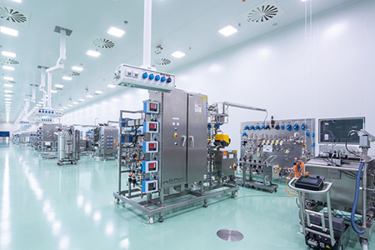
Sanofi tested the upper limits of innovation and regulatory reliance strategy in facility design when it set out to build two identical highly modular facilities for vaccines and biologics manufacturing in Tuas, Singapore, and Neuville-sur-Saône, France.
Those facilities, called Modulus, incorporate extensive automation and maximally customizable room configurations capable of switching products in much shorter timeframes compared to fixed or single-product facilities. Manufacturing suites, called ballrooms, are provisioned with interconnected plug-and-produce process skids to be rolled in and out for rapid platform changes.
The initiative has earned Sanofi several awards already, most recently a 2026 ISPE Facility of the Year Award (FOYA) in the Innovation - Facility of the Future category. We wanted to know more about some of the specific innovations deployed and how Sanofi positioned its plans to regulators in the EU and Singapore. Ben Chia, head of global engineering vaccines and project delivery, offered to answer our questions.
Central to Modulus' FOYA win is the ballroom design. At an operational level, what structural components and process backbones make rapid resizing and reconfiguration possible? Beyond that, how does the flexibility affect maintaining a validated state?
Chia: Sanofi’s twin Modulus facilities each feature multiple ballrooms that have a series of standardized docking stations, that drive operational flexibility, through a plug-and-produce modular architecture. Each station acts as a standardized mini-factory that contains interconnected, adaptable utilities, data, and control interfaces that can accommodate a wide variety of unit operations. This allows for rapid reconfiguration and repurposing to support varying manufacturing needs across multiple products, platforms, or modalities without major reconstruction. Varying process equipment modules can now simply be moved in and connected, resulting in retooling a production line in a matter of days versus months in a traditional production facility.
Another key enabler for operational agility was the implementation of moveable walls with advanced HVAC zoning. These repositionable modular walls create adaptable containment zones to accommodate multiple biosafety requirements, enabling each facility to manufacture up to four products simultaneously.
Our technological platforms have been pre-validated including the flexible core manufacturing process and equipment configurations. This pre-validated approach maintains compliance with health authorities and fundamentally transforms biopharmaceutical manufacturing, enabling agile responses to evolving pipelines and pandemic preparedness while maintaining rigorous manufacturing standards.
The project mentions scouting technology from adjacent facilities. Can you talk about other industries and platforms that informed Modulus?
Chia: Sanofi’s first of its kind modular, scalable, and AI enabled facilities gained inspiration from several different philosophies and industries.
Modulus’ LEGO inspired modularity and its reconfigurable principles shaped the core functionality of the facility acting as a sophisticated LEGO platform, able to be combined, reshuffled, and/or upgraded easily. This industry concept of standardized interlocking components that can create infinite configurations became the foundational design philosophy.
In addition, starting in 2018 a handful of Sanofi colleagues with an entrepreneurial mindset drew inspiration from the startup methodology and disruptive innovation principles. Leveraging Sanofi’s largest R&D center globally in Marcy l’Étoile, France, approximately 30 minutes away from the Neuville-sur-Saône Modulus facility, they challenged traditional pharmaceutical manufacturing paradigms through internal innovation rather than external technology adoption.
Further digital inspiration was drawn from Industry 4.0 concepts in the automotive and semiconductor manufacturing industries, where the integration of AI, robotics, advanced analytics, and connected systems drove fully digitalized end-to-end material handling systems. This includes cobots, robots, and autonomous vehicles that manage movement of everything from raw materials, single-use kits, and finished products to handling of biosafety solid waste management.
How does the Modulus infrastructure compress CMC timelines when transitioning a candidate, for example, from Phase 3 into commercial-scale production? What about in response to a global health emergency?
Chia: Sanofi's Modulus design and infrastructure dramatically compress timelines versus traditional technology. Instead of months-long validation cycles for each new product, Modulus maintains regulatory-approved processes for multiple platform types. This enables 7 to 10-day changeovers between platforms versus the industry standard of several months.
The integration of digital twins and physical training stations mimic the plug-and-produce modular docking stations in the ballrooms, allowing for simulation of entire production processes before physical implementation. This predictive capability compresses scale-up timelines by identifying bottlenecks, allowing for workflow optimization and eliminating trial-and-error iterations. It's all done in a safe environment, reducing onboarding times and ensuring compliance and right-first-time manufacturing.
The Modulus design also reduced the time to implement a new scaled-up production facility, saving ~12 months associated with traditional facility construction. This significantly reduces the risk associated with early investments prior to clinical trial data being ready.

Modulus was explicitly designed for pandemic preparedness and, in the event of a global health emergency, it enables swift capacity reallocation in days rather than months. It shifts Sanofi from reactive to proactive manufacturing. By maintaining validated capacity across multiple platforms, Sanofi can respond to both planned pipeline acceleration and unplanned global health emergencies with equal agility.
Can you describe some of your favorite automated features? Are autonomous mobile robots and other features like kitting crates designed to minimize manual manipulation, adaptable across modalities, too?
Chia: Sanofi’s Modulus facilities incorporate many widely used autonomous systems that are becoming standard in modern pharmaceutical facilities, such as autonomous mobile robots (AMRs) and automated guided vehicles (AGVs). These autonomous systems support the movement of materials for all modalities, from receiving raw materials through manufacturing to waste handling of solid and biocontaminated waste. This fully digitalized end-to-end material handling system not only reduces manual handling but minimizes contamination risks and enhances operational efficiency.
These systems have a unified informational/operational technology (IT/OT) platform, providing real-time visibility, traceability, and control over every step of the manufacturing process. This digital backbone supports predictive maintenance, process optimization, and seamless integration with Sanofi’s manufacturing systems, acting as a benchmark for Pharma 4.0 in biopharmaceutical production.
In addition, Modulus’ sustainable by design concept, including automation standards, supports our ambition to meet the highest environmental standards. Operating low-carbon, energy-efficient platforms reflects Sanofi’s commitment to sustainable biopharmaceutical manufacturing, toward net-zero emissions by 2045. Our facilities earned LEED Gold certification in Neuville-sur-Saône and the BCA Green Mark Certification in Tuas.
A key feature was the use of automated robotic UV disinfection for surface decontamination. Sanofi has eliminated the need for manual disinfection, reducing not only resource demands but also the physical and environmental risk to operators through the elimination of chemical disinfection.
Modulus accelerates the move to single-use technology. Describe any advancements required to achieve the kind of output typical of fixed infrastructure.
Chia: Sanofi's Modulus facilities represent a deliberate shift away from traditional fixed stainless-steel infrastructure toward single-use technology (SUT) to support commercial-scale output. In conventional fixed facilities, cleaning-in-place (CIP) and sterilization-in-place (SIP) cycles consume significant time and resources between product runs. Modulus’ SUT eliminates cleaning and sterilization bottlenecks, enabling faster changeovers and dramatically reducing water, energy, and detergent consumption.
However, to facilitate the move to SUT, standardized kitting, automated logistics, and unified IT/OT platforms needed to be developed to support the multi-platform and multi-product aspirations. Standardized SUT components, compatible across six distinct process backbones – mRNA, viral vectors, recombinant proteins, enzymes, monoclonal antibodies, and legacy platforms – ensure cross-modality interoperability.
A key advance needed was how to manage the plastic waste volumes generated when implementing SUT at scale. The development of a novel macerator system that decontaminates and reduces the volume of single-use biological waste enables further plastic recycling, a critical sustainability advancement that makes large-scale SUT environmentally viable.
Finally, the tandem design and buildout between Tuas and Neuville-sur Saône suggests, at the very least, regulatory reliance. Can you talk about any specific strategy angles that helped you satisfy EMA and HSA requirements?
Chia: Sanofi's parallel execution of our twin Modulus facilities in Neuville-sur-Saône (EMA jurisdiction) and Tuas (HSA jurisdiction) employed several strategic approaches to satisfy both regulators while enabling regulatory reliance.
A harmonized one-standard design with local compliance philosophy ensured global consistency across geographies, while maintaining built-in flexibility for local regulatory adaptations. Both sites share standardized ballrooms, with identical docking stations and the same process backbone architecture. Early engagement with health authorities began during the conceptual design and was maintained throughout construction to confirm the Modulus concept.
Adoption of the BioPhorum standardized modular approach provided a recognized industry framework that both regulators could reference. The proprietary pMODE (Process Module Development) tool ensured consistency in process module design, configuration, and deployment across continents that facilitated regulatory confidence through documented, repeatable engineering practices aligned with international standards. Coupling this with digital commissioning, qualification, and validation (CQV), including optical character recognition (OCR) and e-signature workflows, provided fully digitized traceable documentation that met both agencies' data integrity requirements while accelerating validation timelines.
The parallel execution of both facilities 6,600 miles apart, both in design and execution, further demonstrated equivalency. It created a natural regulatory opportunity, where both agencies could observe that identical design principles, equipment specifications, and quality systems were being implemented simultaneously with equivalent data results, reducing the need for duplicative reviews.
About The Expert:
 Benjamin Chia is head of global engineering, vaccines and project delivery, at Sanofi, where he's worked since 2022. Before Sanofi, he worked for 19 years at AstraZeneca in various facilities, engineering, and commercialization roles. He received a B.Sc. in molecular genetics and microbiology and a B.A.Sc in chemical engineering both from the University of Toronto.