
On The Ground At BIO 2026: Johanna Kaufmann, Ph.D., On The Oncology Modality Puzzle

By Tyler Menichiello, Chief Editor, Bioprocess Online
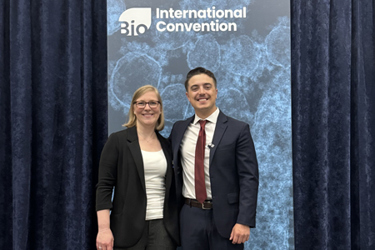
At this year’s BIO International Convention, I connected with Johanna Kaufmann, Ph.D., CSO at Deck Bio, a company developing multi-targeted T-cell engagers for solid tumors. In our interview, she reflects on her time at the show and talks about the panel she participated in, “The Therapeutic Modality Puzzle in Oncology: One Size Fits All or Fit to Purpose?”
Kaufmann will be joining me on a future episode of the “Better Biopharma” podcast, where we’ll discuss the complexities and challenges of developing multi-targeted T-cell engagers. Subscribe wherever you get your podcasts to be notified about that episode when it comes out!
The following transcript has been edited for clarity and readability.
You're speaking on a panel about oncology modalities. What will you be discussing?
Kaufmann: I’m part of a panel discussion about the oncology modality puzzle, where I’ll be joined by a number of additional experts to discuss how different modalities fit within the oncology arsenal of therapeutics and which disease indications or patient populations may be best suited for a given modality.
I’ll be representing the biotech ecosystem and T-cell engagers as a modality, while my fellow panelists will discuss the modalities they've worked on throughout their careers. I'm looking forward to talking with other immuno-oncology experts.
Aside from your own presentation, what are you hoping to see at BIO?
Kaufmann: I have limited time to attend other sessions, but I’d like to support other biotechs in the Startup Stadium. Deck Bio is fortunate enough to be presenting there to introduce what we’re working on, but I’ll be curious to hear how other biotechs are presenting themselves and their science, because that’s where the innovation is coming from. The new therapeutics in the next few years will be coming from these emerging startups.
Tell us about Deck Bio and what differentiates your T-cell engager platform.
Kaufmann: Deck Bio is a pre-seed startup based in Cambridge, Massachusetts, and we’re developing novel T-cell engagers for solid tumors. T-cell engagers are a well-established modality in hematological malignancies, but in solid tumors, success has been restricted to very niche populations, which is due to inappropriate cell-surface targets and the pronounced heterogeneity you see in solid tumors.
At Deck Bio, we’re addressing these two key points and hurdles. First, by selecting a next-generation target class called peptide major histocompatibility complexes (MHC). These are generated as a part of the body’s natural immune surveillance mechanism, and they essentially display a sample of intracellular proteins on the cell surface. This allows us to select very tumor-specific targets that we can access with biologics like T-cell engagers.
We are taking this approach to the next level through multi-peptide MHC targeting, which is the key differentiation point for Deck Bio in this space. Essentially, we’re selecting signatures of multiple target proteins that are expressed exclusively on tumors.
They are processed into peptides that are either identical or highly similar to each other and get loaded into the same HLA allele so they can be recognized by a single drug. The result of this stacked expression is that you have higher expression levels, so more patients with major solid tumor indications can respond to therapy. There’s also an option to combine which target proteins the peptide MHC complexes are derived from, and that addresses heterogeneity.
What’s the general sentiment you’ve seen at BIO 2026, and what are you most excited about for the rest of the year?
Kaufmann: The energy level is very high. Everyone has come into my meetings very motivated to advance new cancer therapies. There’s excitement on the heels of the impressive daraxonrasib data presented at ASCO.
I do still hear concerns about globalization and the impact of China on accelerating drug development. AI is also a topic, although it’s not necessarily been a dominant part of my conversations. Ultimately, the focus has been on the best science that can make new therapies for patients.