
New chemokine that binds HIV co-receptor discovered
The novel molecule was identified using Compugen's LEADS algorithm-driven drug discovery platform, which uses large-scale analysis of expressed human DNA to find new sequences similar to those already known in other protein families. This approach led to identification in public databases of a human gene that resembled the chemokine family of molecules. The similarity was extremely low, however, and it was likely for this reason that the sequence had laid in the public database unrecognized as a candidate chemokine by researchers using other sequence-alignment tools.
Once discovered, its biological role was described by UCSF scientists led by Jason Cyster, an investigator in the Howard Hughes Medical Institute and assistant professor of microbiology and immunology at UCSF. Cyster is senior author on a paper reporting the research in the October issue of Nature Immunology.
In experiments with mouse tissues, the UCSF scientists determined that the novel chemokine, which they named CXCL16 (for 16th chemokine of the CXC subfamily), is produced by cells within the spleen and lymph nodes—including dendritic cells that help trigger immune responses—and also by cells in the spleen's red pulp.
Cytotoxic CD8 T cells, known for the ability to kill virally infected cells, were found to express the chemokine receptor and to be able to migrate towards a source of the chemokine. The researchers speculate that CXCL16 made by dendritic cells might be important in activating CD8 T cells to make them into fully functional killer cells. CXCL16 was also detected in some non-lymphoid tissues, including small intestine, lungs, liver, and kidney, and in these sites it may help the activated CD8 cells carry out their killer function during infections.
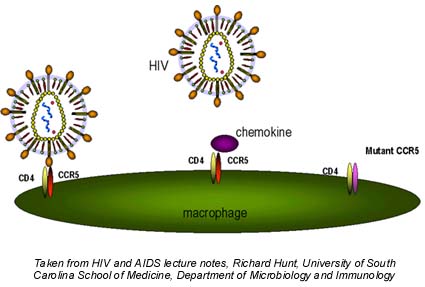
In addition to CD8 T cells, the receptor was found on subpopulations of CD4 T cells, including a specialized population of CD4 T cells that live in the gut and that are known as intra-epithelial T cells. Cyster suggests that the chemokine may help restrain these specialized lymphocytes within the mucosa, ready to fight invaders. Mucosal surfaces are a port of entry for the HIV virus, and high expression of CXCL16 in the mucosa might influence the ability of infecting HIV particles to utilize the CXCL16 receptor as a co-receptor. Another specialized type of T cell, the Natural Killer T cell, was found to have high expression of the receptor. Others have shown an important role for these cells in responding to infections in spleen and liver, both sites where the chemokine is made.
Known by three names including Bonzo, the receptor had been termed an "orphan receptor" since its natural partner—which turns out to be the new chemokine—had not been known. Now that its link with a chemokine has been identified, the scientists have renamed the receptor according to accepted nomenclature. The receptor is now known as CXCR6.
First author on the Nature Immunology paper is Mehrdad Matloubian, a post-doctoral researcher working with Cyster at UCSF. Compugen scientists collaborated on the paper, along with Jay Ryan, assistant professor of immunology at UCSF and a physician at the Veterans Administration Medical Center in San Francisco.
The UCSF research was funded by the NIH, the Packard Foundation, and a UCSF Molecular Medicine Training Program.
For more information: Jason G. Cyster, University of California at San Francisco, Department of Microbiology and Immunology, Room HSE-301, 513 Parnassus, San Francisco, CA 94143-0414. Tel: 415-502-6427. Fax: 415-502-8424. Email: cyster@itsa.ucsf.edu.
Edited by Laura DeFrancesco
Managing Editor, Bioresearch Online
ldefrancesco@bioresearchonline.com
Source: University of California at San Francisco