
Inside AstraZeneca's Fully Electrified Cell Therapy Facility
A conversation with Heather Francis, Mark Benesch, and Brian Stamper of AstraZeneca, and Life Science Connect's Jon O'Connell
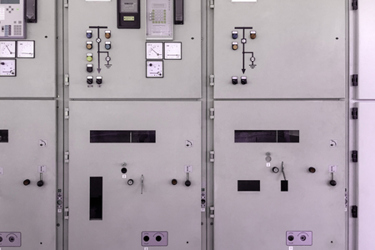
AstraZeneca took aim at two formidable manufacturing goals with its Cell Therapy Facility in Rockville, Maryland — fully electrified infrastructure and 100% uptime — each challenging enough on its own. Coupling them, however, magnifies the complexity of both.
Biologic manufacturing and pharmaceutical production practices in general rely heavily on natural gas infrastructure for critical energy-intensive steps like autoclaving and steam-in-place. Shifting the demands of round-the-clock operations onto a narrowed set of energy sources requires extra engineering and carefully designed redundancy to ensure uninterrupted supply.
The facility was designed to produce thousands of doses annually of autologous cell therapies. The project earned the company a 2026 ISPE Facility of the Year Award (FOYA) in the Social Impact — Unmet Medical Need category. We wanted to know more about the dual engineering and logistical challenges of a site that runs 24/7 on electricity. AstraZeneca agreed to answer some of our questions.
A Cell Therapy Facility's throughput depends on 100% uptime. How can you guarantee that?
At AstraZeneca, we design our manufacturing systems with a clear priority: ensuring every patient receives their individualized therapy, on time and without compromise.
In cell therapy, continuity matters because every batch is manufactured for an individual patient. While no manufacturing operation can claim zero risk, the facility was designed to maximize uptime and operational continuity through layered redundancy and resilient infrastructure. That includes redundant main power feeds, independent HVAC for the cleanroom suites that can be isolated without impact to the rest of the operation, and robust support systems across critical utilities.
Our philosophy was to design out single points of failure wherever possible and to ensure that, if an issue does arise, it can be contained and managed without broader disruption. In the unlikely event of a wider power interruption, the site also has an uninterruptable power supply (UPS) and a backup generator available to protect critical operations and support a controlled response.
This reflects our broader manufacturing and supply team’s commitment to building resilient, reliable supply networks that can support patients around the world.
How does predictive maintenance and modeling play into your strategy for preventing power disruptions?
Predictive maintenance is a key part of the overall reliability strategy. The facility incorporates smart factory capabilities enabled by advanced digital and AI-driven capabilities that are core to how we operate across our global operations. We have real-time visibility into utility and infrastructure performance, allowing our teams to monitor asset health continuously rather than relying only on fixed maintenance intervals.
That creates the opportunity to identify potential issues early, intervene before they become failures, and plan maintenance in a way that minimizes operational impact. Over time, those capabilities help strengthen reliability, reduce the risk of unplanned outages, and support a more proactive and data-driven operating model.
Was it difficult to source natively electric clinical-grade manufacturing equipment like autoclaves? Did you need to commission custom-engineered solutions?
From the outset, sustainability was treated as a core design parameter alongside quality and performance, consistent with our company’s ambition to lead in sustainable healthcare.
Where possible, the approach was to prioritize commercially available, clinically appropriate electric technologies that aligned with the broader design strategy for the facility. Rather than treating customization as the objective, the focus was on identifying solutions that could support robust, compliant, and scalable manufacturing while remaining consistent with the facility’s sustainability ambitions.
In practice, that meant a combination of established technologies and supplier partnership to ensure the final configuration was fit for purpose and that the facility contributes to our broader goal of reducing emissions across our global operations footprint.
On that note, what about energy-intensive processes like SIP? Was any custom infrastructure or unique configuration required? Are you relying more on SUT to limit or eliminate steam demand?
For autologous cell therapy, where each batch is manufactured for one patient, the manufacturing model relies extensively on single-use technologies, which fundamentally changes the utility footprint of the facility.
As a result, the site does not depend on conventional steam-in-place or clean-in-place systems in the way many large-scale biologics plants do. This significantly reduces steam demand and supports a more streamlined infrastructure design. In that sense, single-use processing is not only a manufacturing choice; it is also an important enabler of the facility’s broader efficiency and electrification strategy.

Switching gears, how does the Cell Therapy Facility react to demand flux? What's the protocol if, for example, you have five batches one day and 20 the next?
Demand variability is inherent in autologous cell therapy because manufacturing schedules are closely linked to patient treatment pathways, apheresis timing, and logistics. That means the operation is built for responsiveness from the outset.
The way we address that is through seamless coordination across the supply chain, including apheresis sites, manufacturing, and logistics supported by an operating model designed for agility. When demand fluctuates, the system is able to adapt quickly while maintaining the controls that matter most in autologous therapy, including product traceability and product quality. The objective is not simply to increase throughput but to do so in a way that remains reliable and patient-centered.
Releasing up to an average 11 doses per day also means getting them out the door and to patients. What new outbound supply chain infrastructure (i.e., cryopreservation) did you build to support that volume?
In autologous cell therapy, manufacturing and logistics are inseparable parts of the same patient-centered system, consistent with our broader approach to connecting manufacturing, supply, and logistics into a seamless end-to-end ecosystem. Supporting higher release volumes therefore requires not just manufacturing capacity but a supply chain infrastructure that can move incoming and outgoing material rapidly, reliably, and under tightly controlled conditions.
The infrastructure has been designed to support the timely handling of both incoming apheresis material and outbound finished product, while preserving product integrity and maintaining the precise controls required across the end-to-end cell journey. At this scale, success depends on orchestration across operations, quality, and logistics just as much as it depends on manufacturing.
Based on your experience with this project, do you believe 100% electrification is technically or economically feasible for high-volume products like mAbs? Is the template specific to autologous cell therapy?
The right facility design depends on the needs of the product and process. Autologous cell therapy has characteristics, particularly around single-use processing and patient-specific manufacturing, that make its utility profile quite different from that of a high-volume monoclonal antibody facility.
What this project demonstrates is that when sustainability is treated as a core design parameter from the beginning, alongside quality, reliability, and operational performance, it is possible to make meaningful progress on electrification. The technical and economic answer for other modalities will depend on the specific project demands.
We’re particularly proud of the Rockville facility as a tangible example of what’s possible when you bring those priorities together from the outset — demonstrating how our global manufacturing network is evolving to deliver innovative, sustainable, and patient-centered solutions at scale.
About The Experts:
 Heather Francis is head of cell therapy manufacturing at AstraZeneca, overseeing global GMP strategy, tech transfer, validation, and clinical to commercial supply.
 Mark Benesch is senior director, capital portfolios – Americas, Global Engineering at AstraZeneca, overseeing development and execution of the Americas’ major capital projects portfolio, spanning investments across the enterprise.
 Brian Stamper is the manufacturing excellence lead, biopharmaceuticals development at AstraZeneca, supporting clinical manufacturing optimization and operational efficiency.