
"Genomic" Disease Research Benefits from Genome Project
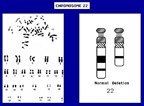
Already that information has reaped benefits. University of Pennsylvania (Philadelphia) researchers have combed through the sequence to determine the cause of chromosome 22q11 deletion disorder, a fairly common genetic disease, occurring once in every 4,000 births. The group has found evidence that so-called low-copy repeat elements are unstable areas where the chromosome is prone to rearrangements that can lead to gene loss.
In the March issue of Human Molecular Genetics, Beverly S. Emanuel, chief of human genetics and molecular biology at The Children's Hospital of Philadelphia and senior author of the paper, reports the analysis of 200 patients treated at the clinic, in comparison with the known chromosome 22 sequence. Their findings showed that the ends of the chromosomes where the deletion occurs in patients were more likely to be in regions of the low-copy number repeats. With this information, the researchers could envision the molecular mechanism causing this genetic catastrophe. For instance, two regions along the chromosome with the same low-copy repeats will contain portions with identical sequences. During meiosis, when each chromosome pairs with its homolog, portions of the two repeats will pair with each other with some frequency, causing the intervening genes to be lost. The result is a chromosome that is missing genes, the basis of the chromosome 22 deletion syndrome.

"Chromosome 22q11 deletion syndrome is representative of an emerging field in genetic medicine, called genomic disease," Emanuel was quoted as saying. Genomic diseases are defined as disorders originating in the genome structure. In addition to chromosome 22q11 deletion disorder, a disease called Williams syndrome is based on a deletion on chromosome 7, and patients with Prader-Willi syndrome are missing a portion of chromosome 15. All three syndromes include organ defects, distinctive facial features, and learning disabilities.
For more information: Beverly S. Emanuel, Chief, Division of Human Genetics and Molecular Biology, The Children's Hospital of Philadelphia, 34th Street and Civic Center Blvd., Philadelphia, PA 19104-4399. Tel: 800- 879-2467. Email: beverly@mail.med.upenn.edu.