
Fusion-Enabled Biosimilar Peptide Teriparatide Expression
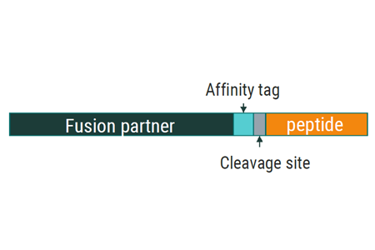
Teriparatide's short 34-mer structure creates well-known difficulties for recombinant expression and efficient downstream recovery, challenges that become more consequential when the goal is supporting biosimilar comparability and commercial manufacturing. This case study details how a high-throughput fusion partner screen, combined with inducible promoter tuning, host strain selection, and engineered affinity tags with defined cleavage sites, identified constructs achieving FklB fusion expression exceeding 6 g/L at initial scale-up.
Notably, native fusion partner coding sequences performed comparably to optimized variants, a finding with meaningful implications for development timelines. Comparability data from the Phase 3 PF708-301 study, showing no clinically or statistically significant differences across immunogenicity, bone mineral density, and bone turnover markers, provides context for the production requirements this approach was designed to meet.
Explore the full case study for details on strain selection methodology and process development outcomes.
Get unlimited access to:




Enter your credentials below to log in. Not yet a member of Bioprocess Online? Subscribe today.