
FDA's Guidance On Cell And Gene CMC Codifies Flexibility
A conversation with Arnold & Porter’s Abeba Habtemariam and Jonathan Trinh and Life Science Connect's Jon O'Connell
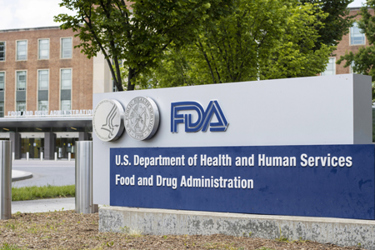
The FDA in May issued final guidance spelling out how it will apply CMC flexibility to cell and gene therapy products heading toward biologics license applications.
The guidance formalizes an approach the agency had already begun previewing publicly in January, when it outlined flexible requirements intended to expedite development without lowering the statutory bar for safety, purity, and potency.
In practice, the document confirms that FDA is willing to accommodate phase-appropriate manufacturing controls, evolving release specifications, risk-based comparability packages, and tailored process validation strategies when sponsors can justify them scientifically. It also reinforces a central message about product understanding and sound risk assessment, which many sponsors have heard in meetings but may not have seen articulated this clearly.
We had questions about some of the nuances of the new guidance and asked Abeba Habtemariam and Jonathan Trinh, attorneys with Arnold & Porter’s Life Sciences & Healthcare Regulatory practice, to help.
Does the final guidance signal a shift in how CBER thinks about the BLA pathway for cell and gene therapies, or is it largely codifying current practice?
Trinh: The guidance is better viewed as clarifying existing FDA practice. FDA already exercises substantial flexibility in the development of human cellular and gene therapy products (CGTs), particularly for CGTs that address serious or rare diseases. This guidance provides greater transparency into some ways that the agency may apply CMC flexibility toward these products in areas such as clinical development, process validation, and commercial specifications.
Habtemariam: Agree; the guidance more so describes existing flexibilities and formalizes FDA’s current practices as they pertain to CMC requirements for CBER-regulated CGTs being developed for licensure through a BLA. As the guidance makes clear, to meet the statutory requirements for BLA licensure, sponsors of CGTs must demonstrate that their CGT product meets the applicable requirements to ensure that the product is safe, pure, and potent. The guidance does not alter the standard but recognizes that the unique nature of a CGT and its development program may require a nontraditional approach to satisfy those requirements.
The flexibilities in the guidance are not entirely new. In fact, earlier this year in January, FDA issued a press release about its flexible approach to overseeing CMC requirements for CGTs and posted a webpage that touches on many of the same topics in this new guidance (e.g., clinical development, commercial specification, and process validation flexibilities for CGTs). At the time, the agency explained it was proactively communicating about regulatory flexibilities that were previously applied case-by-case to select CGT therapies and that by communicating these approaches broadly, FDA aimed to expedite product development across the CGT field.
And to clarify, this guidance was issued as a level 2 guidance for immediate implementation. By definition, level 2 guidance documents are ones that set forth existing practices or minor changes in interpretation or policy. This guidance does not appear to have first been issued in draft and gone through the public comment process.
What CMC flexibilities does the guidance provide to sponsors to support CGT product development?
Habtemariam: The guidance provides recommendations for flexibilities relating to clinical development, process validation, commercial specifications, stability data, reserve samples, and compendial method alternatives. Taking product specifications as an example, the guidance explains that FDA may accept “relatively permissive” release criteria for early-stage CGTs provided such criteria do not compromise safety, with the expectation that specifications would be revised as additional experience is guidance through clinical and product characterization studies. And for specifications for commercial product, FDA recognizes that there may be situations where only a small number of CGT product lots are available for analysis at the time of BLA submission and explains the agency may consider flexible approaches for establishing product release specifications when it is not feasible to define statistically robust commercial acceptance criteria at the time of initial approval.
To give another example, for stability data and expiration dating, while FDA generally recommends data from three lots manufactured at the commercial facility, with a minimum of six months of data, for CGTs, the guidance explains FDA may consider an alternative number of stability lots based on a risk evaluation. The guidance also explains sponsors may use stability data from clinical lots if the lots are representative (e.g., manufactured with the commercial process, using the commercial formulation, and in the commercial container closure).
On that note, we still don't have clarity on the number of PPQ batches required. Does that mean just one theoretically could be sufficient? What evidence is the agency looking for from a sponsor trying to justify the correct number?
Trinh: Not since 2011, when FDA moved away from the old paradigm of “three batches and done,” has the agency specified a certain number of PPQ batches. FDA expects the sponsor to provide a science- and risk-based justification for the number of batches — a number that is adequate to yield evidence that the commercial manufacturing process is reproducible and under control. FDA could consider factors such as the sponsor’s process understanding, variability, control strategy, manufacturing experience, analytical capability, and continued process verification plans. While it may be theoretically possible for FDA to accept a single PPQ batch in certain circumstances, sponsors should generally expect that more than one batch will be necessary to demonstrate reproducibility.
For concurrent PPQ batch release, has this flexibility been used in practice pre-guidance, and did the guidance change anything about how FDA expects sponsors to request it?
Trinh: In its 2011 guidance, “Process Validation: General Principles and Practices,” FDA indicated an openness toward concurrent release of PPQ batches in limited circumstances, such as for drugs that have limited demand, short half-lives, or are medically necessary and manufactured in coordination with FDA to address a drug shortage.
In this guidance, FDA reinforces its willingness to consider concurrent release approaches for certain CGT products. A sponsor interested in commercially distributing a PPQ batch before completion of the PPQ study should consider discussing its plans with the agency and providing a justification for the proposed approach.
The guidance tells sponsors to engage the agency early. What does productive early engagement on CMC actually look like, and why do companies appear to have a hard time initiating it?
Trinh: Not only does the guidance encourage early engagement and engagement throughout product development, but the guidance also recommends engaging the agency before a sponsor implements a particular CMC approach. A sponsor should consider requesting an INTERACT or a Type D meeting to initiate these conversations with the relevant FDA review division.
At the same time, a sponsor may choose to hold off on engaging FDA while its product development strategy is still evolving. A sponsor may worry that seeking FDA feedback prematurely could constrain its options later in development or create expectations around a particular CMC approach before the sponsor is committed to that approach.
Habtemariam: And it is worth noting that many CGT products that fall within the scope of the guidance are likely ones that are eligible for various FDA programs intended to expedite and facilitate the development of drugs for unmet needs (e.g., Fast Track designation, Breakthrough Therapy designation, Regenerative Medicine Advanced Therapy designation). Thus, sponsors may have opportunities for early FDA interaction and engagement through those programs as well.
About The Experts:
 Abeba Habtemariam is a partner in Arnold & Porter’s Life Sciences & Healthcare Regulatory practice. She received her J.D. from Yale Law School. Connect with her on Linkedin.
 Jonathan Trinh is a senior associate in Arnold & Porter’s Life Sciences & Healthcare Regulatory practice. He received his J.D. from The George Washington University Law School. Connect with him on LinkedIn.