
Developing A Novel Lipid Nanoparticle (LNP) Platform Enabling Effective Passive And Active Immune Cell Targeting Strategies For In Vivo CAR T Cell Therapy
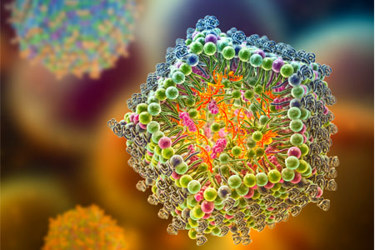
Getting CAR T cells to work without ex vivo manufacturing is one of the bigger unsolved problems in cell therapy. The core challenge is delivery: most lipid nanoparticles (LNPs) go straight to the liver, which is exactly where you don't want them when your target is circulating T cells. This research from Cytiva and Chimeris UK takes a two-pronged approach to that problem, combining passive organ targeting with active antibody-mediated T cell specificity.
The team screened proprietary LNP compositions on the NanoAssemblr Ignite+ system, identified lead candidates showing intrinsic spleen and lymph node tropism, then scaled to the NanoAssemblr Blaze+ with tangential flow filtration downstream processing. Particle size held steady at 70–90 nm, polydispersity index stayed at or below 0.2, and encapsulation efficiency exceeded 90% through two freeze-thaw cycles.
The more striking result is in vivo. LNP 2 conjugated to anti-CD3 antibody showed far higher mCherry mRNA expression in splenic CD3+CD4- T cells than unconjugated controls, with reduced hepatic accumulation. CD8-targeted LNPs then demonstrated dose-dependent tumor killing in NGS mice at doses as low as 1.25 µg per animal.
If you're working on non-viral in vivo cell therapy delivery, the targeting specificity and manufacturing scalability data here are worth your attention. Access the full poster to evaluate the formulation strategy and biodistribution findings in detail.
Get unlimited access to:




Enter your credentials below to log in. Not yet a member of Bioprocess Online? Subscribe today.