
Controlling Complexity In ADC Formulation Development
By Eunbi Iris Cho, Ph.D., Associate Director of ADC Formulation Development
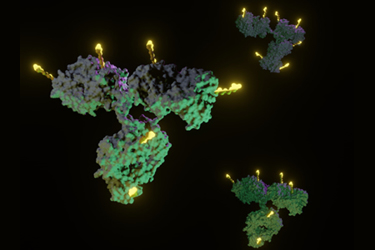
Applying mAb formulation logic to antibody-drug conjugates can introduce risks that don't surface until late in development. Conjugation changes the stability landscape in ways that the parent antibody won't predict: DAR distribution affects both potency and aggregation propensity, linker chemistry creates competing pH requirements, excipients that protect conventional biologics may accelerate degradation in conjugated systems, and photosensitivity can emerge in an ADC even when its individual components appear stable under light exposure.
Written by Dr. Eunbi Iris Cho, Associate Director of ADC Formulation Development and a researcher whose doctoral work focused on the solid-state stability of ADCs, this whitepaper examines how molecule-specific formulation strategies, covering buffer exchange method selection, pH and excipient screening, lyophilization, process-stress studies, and photostability assessment, translate into practical manufacturing controls. It also presents solid-state hydrogen-deuterium exchange coupled with mass spectrometry as an early predictor of lyophilized ADC stability, capable of distinguishing poorly performing formulations weeks before accelerated stability studies reach the same conclusion.
Explore the full whitepaper to understand how connecting early formulation data to scale-up decisions reduces the risk of redevelopment.
Get unlimited access to:




Enter your credentials below to log in. Not yet a member of Bioprocess Online? Subscribe today.