
Component Selection: The Key To Your Program Success
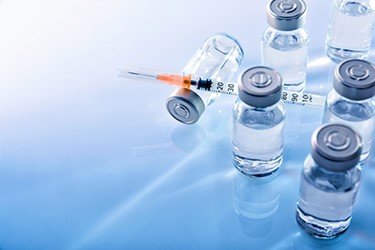
With increasing global adoption of injectable medicines, the number of products going to market in pre-filled syringes and vials is steadily growing and is expected to continue to do so over the next five years. CDMOs that provide aseptic fill and finish services are actively responding to this increased demand.
Companies in need of aseptic syringe and vial fill and finish services may find themselves unprepared for selecting the right components and component supplier to meet the needs of their product. A critical process, which can be overlooked or underestimated, thereby jeopardizing clinical or commercial programs.
COMPONENT SELECTION IS THE KEY TO PRODUCT SUCCESS
The selection of components and suppliers is critical to the success of a product. Your product and patients deserve the best possible components. This is often overlooked and the risk associated with components is underestimated. Suboptimal components can jeopardize clinical development, production performance qualification, product yields, and commercial production reliability. Components that tend to have the most issues are: elastomeric components (vial stoppers and syringe plunger toppers), glass vials, single use production bags, and aseptic connectors. Careful consideration must be given to container closure systems, not only from a product compatibility standpoint, but also from the production and drug delivery mindset to ensure the system fits for its intended use.
Foreign matter and particles are often the most universal problems with components. These concerns are common with rubber and plastic components, such as stoppers and, single use bag systems. Their surfaces can be difficult to clean and can attract particles due to their charged or coated surfaces. If identified via incoming inspection, these lots can be rejected. Replacement lots and investigations cause increased raw material loss, as well as production cost and delays. Since incoming inspection is based on statistical sampling, it may miss the foreign matter present, allowing this foreign matter to pass into production and into the product in the final container. The foreign matter is then discovered during visual inspections. This results again in investigations, delays, and potential rejection of the lot. Ensuring that component manufacture specifications are aligned with incoming and product release specifications are paramount to the success of your project.
Component defects are another problem that is frequently seen throughout many different components. Stoppers and vials are the most notable. Issues related to raw materials, molds, dyes, and other tooling can be difficult to detect via AQL inspection due to destructive nature of the inspection and the large lot sizes. As with foreign matter, defects may be discovered via incoming inspection, on the manufacturing floor, and during the finished product inspection. Depending on the nature and frequency of the defects, the impact will range from loss of valuable final product vials from being culled, investigations, delay in product release, to rejection of the entire batch. Most vial, syringe and stopper components are available in multiple levels of quality and some offer 100% automated inspection processes. The extra costs associated with higher quality components are easily offset by decreasing the number of rejected incoming components, filled units, and final product batches.
FACTORS TO CONSIDER WHEN SELECTING A COMPONENT AND SUPPLIER
Compatibility of your product to the raw materials is critical to product stability and shelf life. Proper vial glass selection for products with non-neutral pH or that have no buffering capability are vital to performance and stability. Uncoated stoppers can have equipment reliability issues, syringe plunger placement issues, and auto injector malfunctions. Ensure that materials selected have low- leachable and extractable compounds and are compatible with the product formulation over the shelf life of the product.
Consideration must be given to all manufacturing processes such as lyophilization, terminal sterilization, and final product storage temperatures (e.g. -80°C), as these processing extremes may have a severe impact to container closures and product vessels.
Container closure integrity is crucial to ensure product safety and stability. Effective closure combinations have improved dramatically over the decades, however, it is still critical to select known and proven combinations. PCI Pharma Services’ Quality Compliance team conducts on-site audits of these critical vendors to assess their capabilities and compliance.
Beware of using custom configurations. Custom configurations may be assembled by a sub-team at the supplier or a contractor. The quality and production controls and process monitoring may not be as robust as the standard operations for off-the-shelf parts. This increases the risk of issues occurring and not being discovered until used to make the product. Common issues observed include increased contamination, improper assemblies, bag punctures, etc.
Consider material(s) that have shorter lead times for supply and replenishment. Lead times of material are not uncommon to be nine months or more. This creates challenges for the Supply Chain and Scheduling teams. Should there be a sudden increase in the number of batches required or a need to remake a batch, this could cause a significant interruption of supply. This can negatively impact critical timelines in phase III and product launch or may even in commercial stock out.
Think carefully about relying on a single source supplier or sole source supplier. If there is a significant component issue or supply interruption, the timeline to qualify and move to an alternate supplier will likely be lengthy and may cause a product shortage. Material suppliers that have multiple sites, have larger production capacity, and solid track records can offer more reliability. Additionally, standard off-the-shelf parts offer greater reliability with more data for trending of issues.
BUILD QUALITY IN
Assessment and selection of components is key to building quality into the process and final product. This starts in development. Therefore, early discussions with the product manufacturer can be very helpful in component section. Component issues are often discovered late in the clinical process, after regulatory filing, and even after commercialization. At this point, the ability to change components becomes significantly more difficult due to regulatory pathways, timing of filings, availability of materials (i.e. APIs), inventory position, possible qualification runs, and new stability data. Begin with the end in mind, make careful selections and optimize early in product development and clinical production. Being willing to change to better components and to make the hard decisions early, will help to avoid poor quality that will plague the product with issues and possible program losses.
It is important to note that some components have a premium version where there are greater process controls and enhanced inspection processes. These components will have significantly improved quality and the risk of issues are decreased. The premium version may be the same material with added control so there little to no impact to the regulatory filling. In addition, products identified with low endotoxin recovery (LER) or intravitreal injection must have tight controls around the product components.
Difficult to inspect products, such as opaque and lyophilized final products, need to have greater controls built into the process and components. Selection of high quality components can reduce the risk of particles and it should be part of the management strategy for these final products.
Control of key and critical suppliers is needed for the production of high quality products. Regulatory agencies not only require it; they will assess for it during inspections. Components and issues related to foreign matter are common reasons for warning letters and recalls. Utilizing high quality components will minimize compliance risk and concern by regulators.
Your product is only as safe as your weakest link. Build quality into the product with high quality components. Avoid product investigations, costly delays, and possible rejection of the product. The incremental cost of higher quality components will typically more than offset by the savings by avoiding these costly issues.
PCI Pharma Services is committed to being an innovative partner and ensuring the best possible outcomes for our clients and the patients they serve. Contact your project representative for more information on materials best suited for your project needs.