
BIO 2026: Modernizing The FDA And Bolstering The Workforce

By Tyler Menichiello, Chief Editor, Bioprocess Online
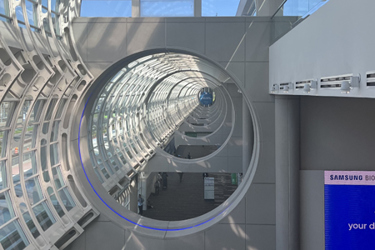
This year’s BIO International Convention was in sunny San Diego, and while Ron Burgundy was nowhere to be found, they did manage to book Katie Couric to moderate a panel. Over the course of four days, an estimated 20,000 people buzzed around the massive convention center networking, attending sessions, and making deals. It was an extrovert’s dream, an introvert’s nightmare, and a biotech executive’s marathon. And with roughly 1,600 exhibitors and over 950 speakers, the program was as stacked as the showroom floor.
This year marks 50 years since the world’s first biotech was established (Genentech, 1976), so much of the conversation centered around defining the next 50 years of innovation, which included sessions around workforce development, technological advancement, and regulatory reform.
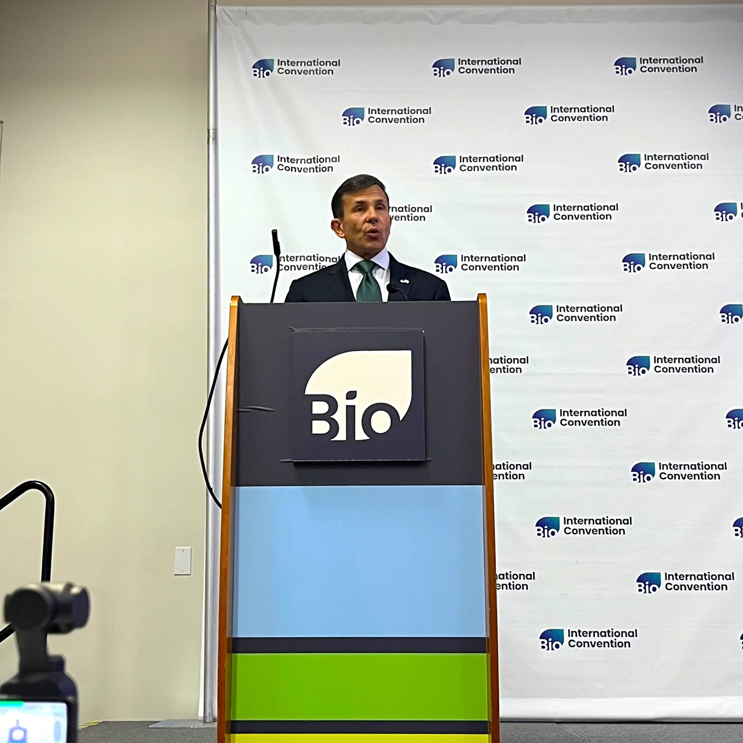
BIO president and CEO John Crowley held a press conference where he reflected on the history of the industry and the “man-made problems” that need to be addressed moving forward. Of note, he spoke about the need to reduce U.S. reliance on China, the disparity in AI adoption between big and small biopharma companies, and the need to expand and accelerate clinical trials. He also moderated a well-attended FDA Town Hall with agency leaders who discussed initiatives relating to hiring and regulatory reform.
After reflecting on my time in San Diego, here are my key takeaways and themes from this year’s convention.
FDA’s Focus On Hiring And Modernization
Sitting stage-side with Crowley during the FDA Town Hall were Michael Davis, MD, Ph.D., acting director at CDER; Karim Mikhail, acting director at CBER and the Office of Therapeutic Products (OTP); and Lowell Zeta, acting chief of staff.
The agency leaders identified hiring and retention as one of the agency’s top priorities right now, with the goal of hiring about 2,200 people.
“We’re at about 600 that are in onboarding and clearance at various levels, with a couple hundred already through the [hiring] process,” Zeta said. “[Hiring] is a key topic that’s front and center with the agenda for every bi-weekly executive committee meeting, and something that we discuss and debate on how to optimize, how to accelerate, and how to prioritize.”
At the same time, “There is a lot of effort to minimize attrition,” Mikhail told the audience. This includes proactive meetings between leadership and any staff who are considering leaving the agency to discuss their conditions for staying.
The FDA is also being “incredibly creative” in utilizing members across teams to support agency functions and manage uneven workloads, said Mikhail. “There are experts that we can take from one team and borrow to another, at least for a period of time, until we have the right person hired,” he explained.
Mikhail also spoke about Operation Trialblazer, the U.S. Department of Health and Human Services’ (HHS) cross-agency initiative to accelerate the IND process and modernize clinical development. He explained the program’s focus in two parts:
- Streamlining requirements for an IND submission by focusing Phase 1 exclusively on “safety and safety only,” deferring non-essential or non-safety-related CMC requirements to later clinical stages
- Reforming the pre-IND phase by exploring a model where sponsors can use vetted external advisors to vet their files ahead of pre-IND meetings with the agency, as well as by introducing a new pilot program for rolling IND submissions
The latter would allow companies to receive real-time feedback on parts of their IND package rather than the whole thing at once, which should help expedite the review process.
Strengthening U.S. Biotech Begins With The Talent Pipeline
Workforce development was a prevalent theme at this year’s convention, and I have a feeling it will become a larger talking point in the years ahead. As the industry focuses on growth — and as the U.S. in particular works to onshore domestic biomanufacturing and bolster its bioeconomy to maintain its lead on China — the critical need to invest in talent and training will grow in tandem.
Two sessions specifically focused on this need to grow the workforce, both globally and in the U.S.
“Securing America’s Biomanufacturing Future: Industry Forums In Action” was a panel discussion moderated by Maria Thacker Goeth, president and CEO at Georgia Life Sciences, that featured pharma leaders and regional forum organizers who highlighted the collaboration happening across the country.
The panel included Liisa Bozinovic, the former executive director at Oregon Life Sciences; James Hulvat, Ph.D., director and general manager at Thermo Fisher Scientific’s Bend Oregon site; Bill Monteith, Biotech Manufacturers Forum program manager for North Carolina Life Sciences Organization (NCLifeSci); and Jennifer Petty, senior director of human resources at Eli Lilly.
The main takeaway from this panel was that collaborative work and investment in growing regional biomanufacturing ecosystems is the key to strengthening the talent pipeline across the U.S.
“People are more willing and likely to relocate if they see multiple career options,” said Thacker Goethe, emphasizing the importance of industry players working together to cultivate local talent pools.
The good news is that groups like Georgia Life Sciences, Oregon Life Sciences, NCLifeSci, and others are dedicated to the cause. Representatives from these organizations stressed the importance of engaging local schools and universities to expose students to careers in biomanufacturing, as well as to design curriculums and apprenticeship programs that reflect the needs of the industry.
Petty described one instance where Eli Lilly, in collaboration with industry partners and local colleges, worked together to design an apprenticeship program with a heavy robotics element to support the need for more technically skilled maintenance workers.
“That’s a real-life solution where all of us working independently would not have been as effective,” she said.
Lilly and its partners went even further and decided to recruit together. “Within six weeks, all of us had our apprenticeships filled,” Petty told the audience.
Global Efforts To Support Biomanufacturing
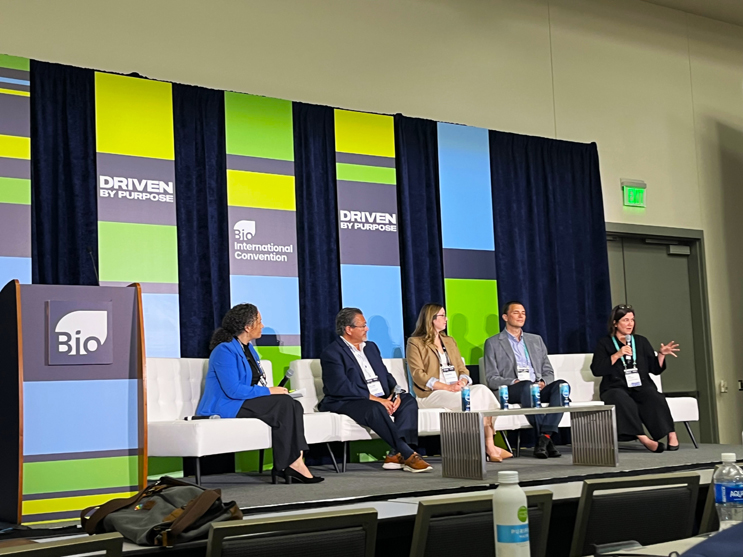
The second panel was titled “Future-Ready Solutions To The Global Biomanufacturing Talent Shortage,” moderated by Penny Walsh-McGuire, CEO at Canadian Alliances for Skills and Training in Life Sciences (CASTL). The panel featured Sven Ansorge, Ph.D., director of technical training and site lead at CASTL; Robyn Cardwell, Ph.D., assistant vice chancellor and VP of the Center for Biotechnology at San Jacinto College; Michelle Ferrone, COO at Maryland Tech Council; Gyoonhee Han, Ph.D., director general at the Korea National Institute of Bioprocess Research and Training (K-NIBRT); and Killian O’Driscoll, chief commercial officer at the National Institute for Bioprocessing Research and Training (NIBRT).
This discussion was much the same as the U.S.-focused panel: a little on public-private collaboration, an emphasis on industry-aligned curriculum design, and more on the importance of engaging students early in life.
There seems to be a push to lower the barrier to entry biotech by exposing school-age children and young adults to entry-level roles in biomanufacturing that don’t require advanced degrees.
“I think everybody thinks that to get into the life sciences, you need to have a Ph.D. or a master’s degree, or even a four-year degree,” said Ferrone. “For us, in our talent pipeline and what we’re looking for in Maryland, it really is just educating people, You do not need to have that four-year degree to get into an entry-level position in a life sciences company.”
The panelists agreed that AI literacy and digital skills will be in high demand in the coming years, though designing relevant curriculums to support these skills is a challenge when the industry itself is still adapting to the influx of these new technologies.
Ultimately, the industry seems to be growing in the right direction. As O’Driscoll highlighted, pipelines are expanding and diversifying across the globe in terms of volume and modality type, fueling the need for more talent. Developing this next generation of workers is an international priority, and it’s bigger than any one company. By collectively investing in local biotech ecosystems — especially in specialized education — biopharma companies are investing not only in their own security and prosperity, but in the future of the industry.
As the late Christopher Reeve once said, “Biotechnology: It’s a great big word that just means hope.”
So, here’s to continued investment in hope around the world.