
CULTURE DEVELOPMENT FEATURED ARTICLES
 A New Cost Paradigm For CAR Cell Therapies?
Hear from Acepodia CEO Sonny Hsiao about his company's claims that its proprietary approach to conjugating novel natural killer cells could reduce the cost of cellular therapeutics.
-
 Scientists 'Snip' HIV From Cultured Human Cells
Scientists from Temple University reported that they have designed a new approach to remove HIV from human cells growing in culture through genome editing.
-
 Stainless Steel Vial Filling System Developed For Use In Vaccine Facilities
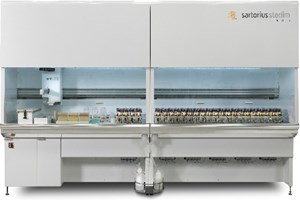
TAP Biosystems (now part of the Sartorius Stedim Biotech Group), a leading supplier of innovative cell culture and fermentation systems for life science applications, recently announced the development of a stainless steel version of the fill-it system, designed for safely dispensing biohazardous materials such as vaccine stocks.
-
 FDA Approval Pushes Novartis Into 21st Century Vaccine Development
In 2009, the world experienced a global threat in the form of H1N1. Despite a prompt response to the need for a vaccine in the United States, it was still not available until six months later and not enough doses were even produced to cover all Americans. During the year-long battle with the deadly virus, the CDC estimates between 8,870 and 18,300 people died due to H1N1-related complications. In the world of influenza vaccine production using chicken eggs, the response experienced during the H1N1 outbreak is not uncommon. Is this the best our industry can do? Novartis says NO.

CULTURE DEVELOPMENT WHITE PAPERS & CASE STUDIES
-
The Client Experience—Key to a CDMO's Success
In the dynamic contract development and manufacturing organization (CDMO) industry, client-focused businesses succeed in retaining and growing our client base by delivering on project objectives and satisfying a client’s expectations.
-
Live Cell Imaging Of GPCR Dependent Second-Messenger Systems
A significant proportion of academic and drug discovery research is devoted towards the elucidation of second messenger signaling cascades resulting from interactions between G-protein coupled receptors (GPCR) and their ligands. By Paul Held Ph. D. and Peter Banks, Ph. D., BioTek Instruments, Inc. and Paul Tewson, Anne Marie Quinn and Thom Hughes, Montana Molecular
-
Important Considerations For Implementing A Single-Use Biomanufacturing Strategy
Recent trends in biomanufacturing technology and the biopharmaceutical market are supporting the increased adoption of single-use (SU) manufacturing systems. On the demand-side, the biopharma industry is focusing on niche and rare diseases with smaller patient populations, resulting in the need for smaller, more agile biomanufacturing capacity. By Jodi M. Zobrist and Nicole W. O'Brien, Ph. D., Gallus Biopharmaceuticals, LLC
-
Are You Planning To Fail?
The problem with managing demand and supply variability in the supply chain stems from the inability of traditional planning systems to solve the bullwhip effect, a problem demonstrated by Prof. By Narayan Laksham and Richard Sherman
-
Automation Of HTRF® elF4E Kinase Assay Using A 3D Tumoroid- Based Cell Model
Three-dimensional (3D) cell culture is poised to meet the need for a more in vivo-like cellular model with which to test large and small molecules. This is accomplished by providing a method that allows for the reorganization of cells into a format which re-establishes the necessary cellular architecture and communication networks seen in normal tissue. Recently a methodology has been put forth that incorporates a simplified procedure for the creation of a cell and collagen hydrogel mix. The inclusion of appropriate liquid handling instrumentation can further simplify the process and ensure the generation of accurate, robust results. By Brad Larson, Peter Banks, Nicolas Pierre and Grant Cameron
-
Global Biochemical Profiling For Bioprocess Optimization
It is widely understood that the production phase of bioprocessing can have a significant impact on the overall profitability of the biopharmaceutical.
CULTURE DEVELOPMENT PRODUCTS
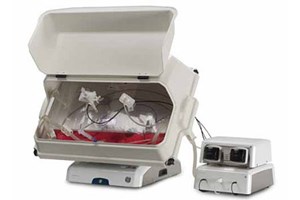
The ReadyToProcess WAVE 25 rocker features integrated temperature sensors and load cells, designed for convenient handling and control of cell cultures up to 25 L. A filter heater is delivered with the system.
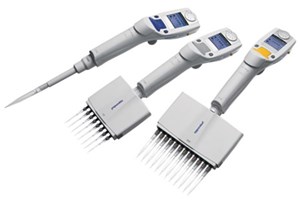
The Eppendorf Xplorer pipettes are electronic single, 8 and 12 channel pipettes designed to aspirate and dispense liquid volumes from 0.5μL to 10mL while eliminating many of the potential error risks associated with manual pipetting.
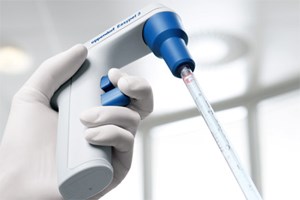
The Easypet 3 was designed with the latest technological developments and now, pipetting speed is controlled simply with the tips of your fingers allowing you to experience more sensitive control of the meniscus. The powerful motor delivers efficient performance to speed up large volume pipetting while also providing the utmost control for smaller volumes. The Easypet 3 has an excellent speed adjustment that allows for an optimized gravity drain option that can be used for easy dispensing of liquid without splashing.
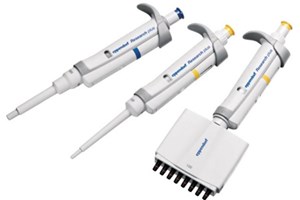
The Eppendorf Research plus is one of the most commonly used pipettes in the world. Besides safety and robustness the main focus of its design lay on ergonomics. The Research plus protects the health of our customers during their daily work. It has pioneered the renowned PhysioCare Concept® and thus reduced the strain on hand and arm during pipetting essentially. The Research plus is the pipette family with the lowest weight and lowest operation forces at Eppendorf. Lower operation forces can only be reached with our Eppendorf electronic pipettes. The spring loaded tip cone ensures low tip attachment and ejection forces. The Research plus has the ability to be autoclaved without the need to be disassembled. Fixed-volume pipettes and multichannel options are available; the Research plus pipette will become an indispensable tool in your laboratory.
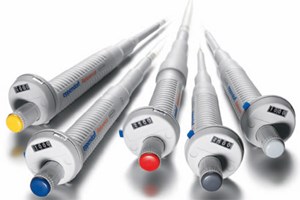
The world of research and science is developing in shorter and shorter cycles. That’s all for the better, because true constants are now available! Values you can always depend on. Of course, the Eppendorf Reference is one of them.
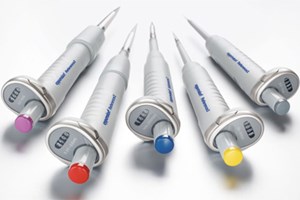
The Eppendorf Reference 2 is the newest pipette family at Eppendorf and it is our premium product. Besides improvement of its ergonomics the focus of its design lay on providing the most accurate results possible, optimum user safety, reliability and robustness for a long service life. The innovative single button operation is not only fast and easy, but it also allows active aerosol reduction and thus protects the user, the sample and the pipette. The sturdy handle manufactured with stainless steel protects the pipette from impact and in combination with the spring loaded bumpers the Reference 2 is likely to stay within calibration even if it takes a fall. These high levels of security make the Reference 2 ideal for use with precious liquids, or in any application requiring extremely high levels of accuracy. When there can be no compromise on quality and reproducibility, Eppendorf’s Reference 2 is an ideal instrument for these Liquid Handling applications.