
 bio-formulation-995x60
FEATURED ARTICLES
-
 Expanding The IV → SC Framework: What Reformulation Really Means
IV → SC is a system design challenge. Success depends on aligning formulation, device, manufacturing, and clinical strategy early to avoid costly failures and redesigns.

WHITE PAPERS & CASE STUDIES
-
 De-Risk Nucleic Acid Therapeutics Through Strategic Outsourcing
Bringing a nucleic acid therapy to market requires specialized formulation and development knowledge. Innovators need rigorous analytical and formulation strategies to achieve stability and quality.
-
 Life Cycle Assessment Of Extended Use Strategies For Single-Use Assemblies
Examine how extending the use of single‑use assemblies can significantly reduce emissions, resource consumption, and waste in bioprocessing, offering a data‑backed path toward sustainability.
-
 Why Flexible, Tailored CDMO Support Is A Non-Negotiable In Sterile Fill-Finish
Modern injectable programs require adaptable manufacturing strategies. Learn how flexibility, technical depth, and collaboration reduce complexity, manage change, and protect long‑term supply.
-
 Beyond Particle Counting: Why Modern Biologics Need Particle Forensics
High particle counts don’t always mean high risk. Identifying particle type and origin—not just quantity—avoids false alarms, protects timelines, and turns data into action.
-
 Optimize Time, Space and Cost With Inline Buffer Formulation And System
Discover how integrating inline buffer formulation with chromatography reduces buffer waste by 50% and delivers a 710% ROI, transforming downstream efficiency and sustainability.
-
 Flexibility In Drug Development: From Tactical Response To Strategic Imperative
Build flexibility into your drug development strategy to navigate change effectively, maintain momentum, and drive successful outcomes across every stage of the lifecycle.






PRODUCTS & SERVICES
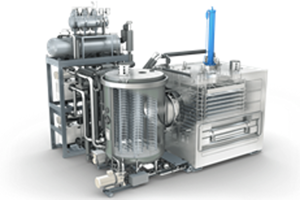
Unused 30 Sq Meter Optima Pharma Freeze Dryer Lyophilizer, Model FD S-30, stainless steel construction, (13) usable shelves, 1520mm x 1520mm, 120mm shelf spacing, stoppering, job# 4039023, built 2020. Unit was never installed still on original shipped skids from manufacturer.
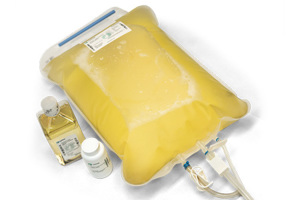
Whether you're looking to boost performance, enhance your capabilities, or simply get consistent, high-quality results, HyClone™ peak expression medium and HyClone™ prime expression medium are the solutions for you.
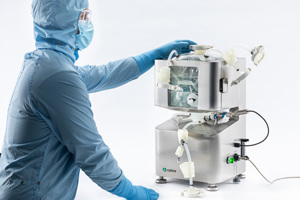
The LevMixer™ 10 L single-use mixing system is a low volume mixer designed for both upstream and downstream applications.

DIANT Pharma provides continuous manufacturing systems and technical services for nanoparticle-based formulations. The company’s platform supports both research and manufacturing teams working on lipid nanoparticles (LNPs), liposomes, polymeric micelles, nucleic acid–lipid complexes, and other colloidal systems.

Simple, scalable genome engineering at the naturally occurring S-SELeCT™ safe harbor locus.

Build cell-based models of disease and accelerate therapeutic development with TARGATT™ large knock-in technology in iPSCs.

Sterility is key for high-risk applications such as injectables, parenteral formulations, ophthalmic and peritoneal dialysis solutions, and many more.
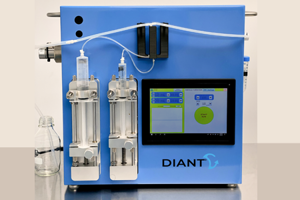
Developing nanoparticle formulations requires a scalable solution that replicates manufacturing conditions at a small scale. Turbulent jet mixing enables linear scalability while conserving materials.
ABOUT
Formulation
Formulation in bioresearch is directly associated with pharmaceutical research and development. It is the practice of combining different chemical substances that include the active medical drug. This combination of drug and chemicals is tweaked until they have a final medicinal formulation that can be tested and receive final approval for large-scale market use.
The object of pre-formulation and formulation is to develop a stable preparation of a specific drug that is acceptable for human consumption. All drugs, by necessity, contain other chemicals. In order to put a drug into a capsule or tablet form it requires a variety of substances other than the drug itself. Formulation is needed to ensure that the drug will work when combined with these other substances.
It may surprise you to know that most formulations are not complete until after Phase III clinical trials are in progress or completed. All the early trials test drug stability, and drug load, which is the ratio of active drug to the total content of the actual dose.
Formulation studies address a variety of issues includinggrain size, pH (acidic or alkaline), solubility, and polymorphism (the ability of a drug to exist in more than one form like liquid and capsule). Other items formulation addresses is taste, appearance, tablet hardness and tablet or capsule disintegration.
Another aspect of formulation is testing how humidity, temperature, oxidation, ultraviolet light or visible light affects the formulation. The formula must be stable and not degrade under all of the different environmental factors.
Formulation involves a lot of experimenting with different blends of materials and drugs, but is absolutely crucial for the development of effective, safe, stable, oral drugs, and topical ointments.